
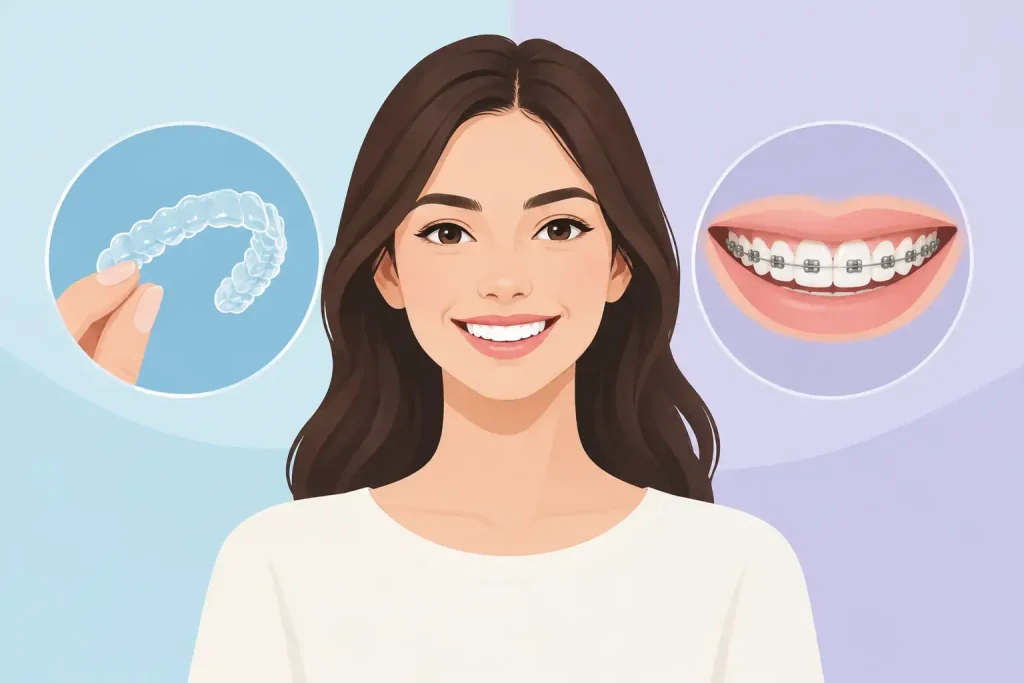
A straighter smile is rarely just about appearance. Crowded or poorly positioned teeth can be harder to clean, may place uneven pressure on certain teeth, and can affect how comfortably you bite. When weighing up clear aligners versus braces, the best option is not simply the least noticeable one. It is the treatment that can safely achieve your goals while fitting realistically into your daily life.
For teens, adults and parents considering orthodontic treatment, a careful assessment comes first. Your teeth, bite, gum health, jaw development and commitment to treatment all matter. The right answer can be different for two people with smiles that look quite similar.
Clear aligners versus braces: the key difference
Clear aligners are a series of custom-made, removable plastic trays. Each set is worn for around one to two weeks before moving to the next, gradually guiding teeth into their planned positions. They are designed using digital scans and a detailed treatment plan, allowing you to see a prediction of the intended tooth movement before treatment begins.
Braces use small brackets fixed to the teeth and a wire that is adjusted over time. Modern braces are more refined than many people remember, but they remain visible and stay in place throughout treatment. Because they are fixed, braces continue working day and night without relying on the patient to put them back in after meals.
Both options can create excellent results. The question is whether the type and complexity of your tooth movement suits aligners, or whether braces offer the more predictable and controlled approach.
When clear aligners may be a good choice
Clear aligners are often popular with adults and teens who would prefer a discreet option. The trays are smooth, removable and generally comfortable once you settle into each new set. There are no brackets or wires to rub against the cheeks, although it is still normal to feel gentle pressure when changing aligners.
Being able to remove aligners for meals is a practical advantage. You can continue to enjoy foods that may be difficult with braces, then brush and floss normally before putting the trays back in. This can make daily oral hygiene easier, particularly for people who are already committed to a thorough routine.
However, removable does not mean optional. Clear aligners usually need to be worn for 20 to 22 hours each day. Taking them out for meals, hot drinks and brushing is expected. Leaving them out for long periods can slow treatment, reduce the accuracy of tooth movement and mean you need to wear aligners for longer. They need to be kept safe too. A surprising number of aligners are accidentally wrapped in a napkin and thrown away after lunch.
Clear aligners can be suitable for many mild to moderate crowding, spacing and bite concerns. Some more complex cases can also be treated with aligners, often using small tooth-coloured attachments that help the trays grip and move teeth more effectively. For other cases, braces may be recommended because they provide greater control over difficult movements.
When braces may be the better option
Braces remain a highly effective orthodontic option, particularly for more complex tooth positions and bite problems. Because brackets are bonded to the teeth, the orthodontic system can apply steady force with close control. This may be helpful where teeth need significant rotation, are severely crowded, have not erupted as expected, or where the bite needs more substantial correction.
For younger teenagers, fixed braces can also remove the challenge of remembering to wear aligners. A child may be very responsible in most areas, yet still find it difficult to manage trays around school, sport, sleepovers and busy family routines. Braces take compliance out of the equation: the treatment is in place all the time.
The trade-off is cleaning. Food can collect around brackets and wires, so brushing carefully after meals and using interdental brushes becomes essential. Sticky lollies, hard foods and certain crunchy snacks can damage braces or become trapped. Repairs can add inconvenience and may extend treatment time.
Braces are more noticeable than clear aligners, but this is not necessarily a drawback for everyone. Some younger patients enjoy choosing coloured elastics at appointments. Others simply prefer the confidence of knowing their treatment is working without having to think about wearing removable trays.
Comfort, appearance and everyday routines
The most suitable treatment often comes down to the details of ordinary life. Clear aligners are usually less visible and can be removed for an important event, photo or presentation. They may suit adults who are regularly meeting clients, speaking publicly or simply prefer a subtle treatment option.
Braces cannot be removed for special occasions, but they do not need to be taken out before coffee, snacks or dinner. With aligners, drinking plain water while wearing them is fine, but coloured or sugary drinks can stain the trays or increase the chance of decay if liquid is trapped against the teeth. Hot drinks can also warp the plastic.
Both treatments may affect speech briefly while you adjust. Some people notice a slight lisp with clear aligners for the first few days. Braces can cause temporary rubbing on the lips and cheeks. Orthodontic wax can help, and most people adapt quickly.
Gum health comes before tooth movement
Whether you choose clear aligners or braces, healthy gums are the starting point. Moving teeth in the presence of untreated gum disease is not advisable. Bleeding gums, persistent bad breath, gum recession, loose teeth or swelling should be assessed before orthodontic treatment is planned.
A thorough examination looks beyond whether teeth appear crooked. It considers plaque and tartar build-up, gum inflammation, existing fillings and crowns, signs of tooth wear, jaw joint concerns and the way your teeth meet. If gum treatment or a professional clean is needed first, addressing it helps create a healthier foundation for your future smile.
During treatment, regular dental checks and cleans remain important. Clear aligners make access for brushing straightforward, while braces require more technique and patience. In either case, prevention protects the result you are investing in.
Cost and treatment time: what affects them?
It is understandable to compare the price of clear aligners and braces, but a single figure rarely tells the full story. Costs vary according to the complexity of your bite, how many teeth need moving, the expected treatment duration, the type of appliance used and whether additional procedures are required.
A short aligner treatment for minor crowding is different from comprehensive treatment to correct a bite problem. Likewise, a straightforward course of braces is different from treatment involving severely displaced teeth, extractions or multiple phases of care. Retainers at the end of treatment are also essential, because teeth naturally tend to shift over time.
Treatment times vary widely, but many orthodontic plans take roughly 12 to 24 months. Some cases are shorter and others require longer. Aligners are not automatically faster, and braces are not automatically slower. Consistent aligner wear, regular reviews and good oral hygiene all influence progress.
At Tooth Shine Dental, recommendations should be based on your individual needs, with the expected steps, fees and alternatives explained clearly before you decide. There is no benefit in choosing a treatment that sounds convenient if it is unlikely to deliver a stable, healthy result.
A note for parents considering treatment for children
An early orthodontic assessment can be valuable even when a child still has baby teeth. It does not always mean treatment needs to begin straight away. Often, the best plan is simply to monitor growth, guide oral habits or identify issues that may be easier to manage while the jaw is developing.
Early review may be particularly helpful if a child has crowded teeth, teeth that are erupting in unusual positions, a crossbite, prominent front teeth, prolonged thumb sucking, mouth breathing, difficulty chewing or concerns about their jaw growth. Some children benefit from early intervention, while many are best treated later once more adult teeth have erupted.
Making a decision you can maintain
The right choice is usually the one that matches both your clinical needs and your habits. If you can reliably wear aligners for the recommended hours, keep them clean and attend reviews, they may be an excellent discreet option. If your case requires greater control, or you would rather not manage removable trays, braces may be the more dependable path.
A thoughtful orthodontic consultation should leave you knowing what is happening in your mouth, what each option can realistically achieve and what you will need to do to protect your result. A healthy, comfortable smile is built gradually, and choosing a treatment you can confidently stick with is a very good place to begin.