A glass of soft drink with lunch, lemon in water throughout the day, or reflux that goes unnoticed can gradually change the surface of your teeth. Tooth erosion is often painless at first, which is why it can be easy to miss until teeth become sensitive, worn or more prone to chipping.
Unlike a cavity, which is caused by bacteria and plaque, tooth erosion happens when acids wear away the hard outer layer of the tooth, known as enamel. Enamel does not grow back. The good news is that early changes can often be slowed or stabilised with the right habits, regular monitoring and personalised dental care.
What tooth erosion does to your teeth
Every tooth is exposed to small acid challenges during the day. Normally, saliva helps dilute acids and supports the natural repair process that follows. Problems can develop when acid exposure is frequent, strong or prolonged, giving saliva too little time to do its job.
As enamel becomes thinner, teeth may look more translucent around the edges, particularly the front teeth. The underlying dentine is naturally more yellow than enamel, so teeth can also appear darker or less bright even with good brushing. You may notice sensitivity to cold drinks, sweet foods or brushing.
In more advanced cases, teeth can look shorter, flatter or slightly cupped on their biting surfaces. Fillings may seem raised because the tooth structure around them has worn down. Edges can chip more easily, and changes to the bite may affect comfort when chewing. These changes are worth assessing early, before more extensive treatment is needed.
Erosion, tooth decay and grinding are different problems
It is possible to have tooth erosion, decay and tooth wear from grinding at the same time, but they are not the same condition. Decay is linked to plaque bacteria producing acid. Erosion is caused by acid reaching the teeth directly. Grinding or clenching creates mechanical wear from tooth-to-tooth contact.
The patterns can overlap, so self-diagnosis is not always reliable. A careful examination can help identify what is affecting your teeth and whether gum health, bite forces, diet, reflux or dry mouth are contributing.
Common causes of tooth erosion
Acid can come from foods and drinks, but it can also come from inside the body. The cause matters because preventing further wear is usually the most valuable part of treatment.
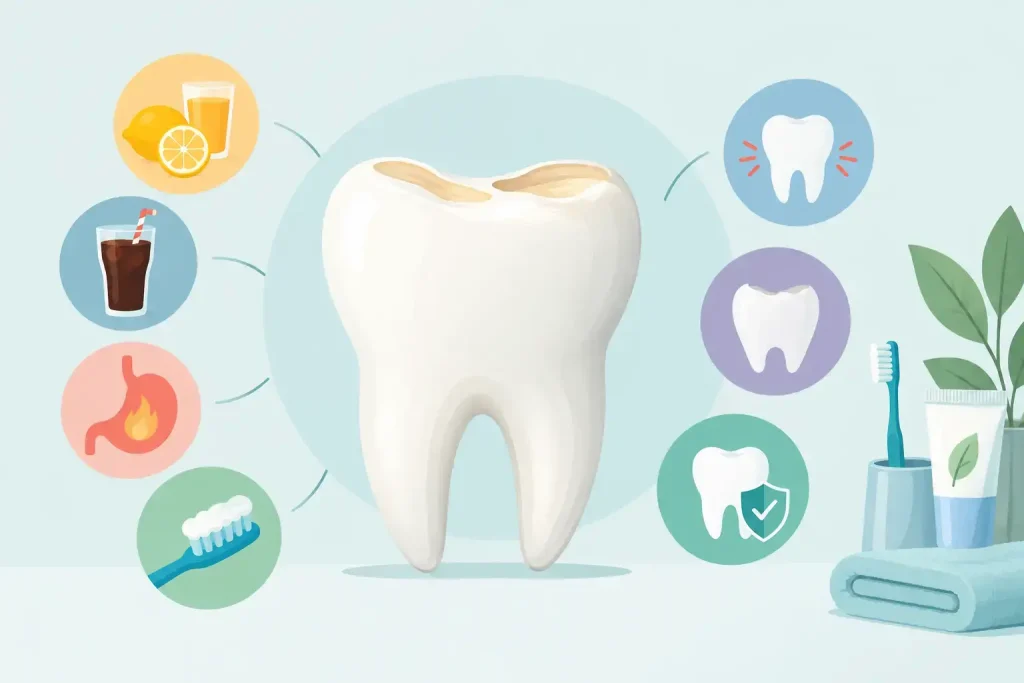
Frequent sipping is often more harmful than having an acidic drink with a meal. This includes soft drinks, energy drinks, sports drinks, fruit juice, kombucha and flavoured sparkling water. Citrus fruits, vinegar-based foods and wine can also contribute, especially when consumed regularly.
Other causes may be less obvious. Reflux can bring stomach acid into the mouth, sometimes during sleep, even when there is no classic heartburn. Repeated vomiting associated with illness, pregnancy or an eating disorder can also expose teeth to strong stomach acid. Some medicines and health conditions can reduce saliva flow, leaving teeth with less natural protection.
Your risk is individual. A person who occasionally drinks orange juice may have little issue, while someone who sips lemon water all day, has dry mouth and clenches at night may have a much higher risk of ongoing wear.
Signs that deserve a dental check-up
Sensitivity is a common sign, but it is not the only one. It is a good idea to book an appointment if you have noticed persistent sensitivity, chips without a clear injury, thinning or translucent front teeth, changes in tooth shape, or teeth that feel rough or sharp.
A check-up is also sensible if you experience frequent reflux, dry mouth, regular vomiting or a diet that includes frequent acidic drinks. At Tooth Shine Dental, assessments are approached carefully and without judgement. The aim is to understand the cause, check your gums and teeth thoroughly, and explain what can realistically help protect your smile.
If a tooth has fractured, is causing strong pain, or you have swelling, contact a dentist promptly. Tooth erosion itself may progress slowly, but a weakened tooth can sometimes break suddenly.
Everyday habits that help protect enamel
Small changes can reduce how often teeth are exposed to acid. They do not need to be all-or-nothing changes, and the best plan depends on your routine, health and diet.
Try to keep acidic food and drinks to mealtimes rather than sipping them over hours. Water is the best everyday drink, particularly between meals. If you do have an acidic drink, finishing it in one sitting is generally kinder to teeth than repeatedly taking small sips. Using a straw can reduce contact with front teeth for some drinks, although it does not remove the risk completely.
After acidic food, drink or reflux, rinse your mouth gently with water. Avoid brushing straight away. Acid temporarily softens enamel, and brushing immediately can increase surface wear. Waiting around 30 minutes before brushing gives saliva time to help rebalance the mouth.
Use a soft toothbrush and fluoride toothpaste twice daily, with gentle pressure. Scrubbing harder does not make teeth cleaner, and it can aggravate exposed, worn surfaces. Spit out excess toothpaste after brushing rather than rinsing thoroughly, so a small amount of fluoride remains on the teeth.
Four practical habits are particularly worthwhile:
- Choose water as your regular between-meal drink.
- Keep acidic drinks and foods mainly to meal times.
- Wait at least 30 minutes to brush after an acidic exposure.
- Ask your dentist about fluoride support if you have sensitivity or a higher erosion risk.
If reflux may be involved, speak with your GP as well as your dentist. Dental care can protect and restore teeth, but managing the underlying health cause is equally important.
How tooth erosion is treated
Treatment is not automatically about crowns or major dental work. When erosion is early and the teeth are stable, monitoring, fluoride treatment, desensitising products and practical diet advice may be enough. Regular photographs or digital scans can help track whether wear is changing over time.
Where enamel loss has caused sensitivity, roughness or small chips, tooth-coloured composite bonding may rebuild and protect selected areas. This is often a conservative option, although it may need maintenance or repair over the years, particularly for people who clench or grind.
When teeth are more severely weakened or worn, stronger restorations such as onlays or crowns may be considered. These can restore shape, function and appearance, but they require careful planning because restorations do not stop erosion by themselves. The acid exposure and any bite forces still need to be managed to protect both natural teeth and dental work.
If clenching is adding to the wear, a custom night guard may be recommended. For some patients, treating gum disease, addressing dry mouth, adjusting a bite issue or seeking medical care for reflux is an important part of the overall plan. There is no one-size-fits-all answer, which is why a slow, thorough assessment is valuable.
Prevention is the most gentle treatment
It can be worrying to learn that enamel does not regenerate, but a diagnosis of erosion does not mean your teeth will inevitably become fragile or require extensive treatment. Many people protect their teeth successfully once the pattern is recognised and the causes are addressed.
A calm dental review can establish a baseline, identify the areas most at risk and help you make realistic changes that fit family life, work and your health needs. If your teeth have become sensitive, look thinner or seem to be changing shape, arranging a check-up now can give you clear answers and a practical path forward before a small concern becomes a larger one.