
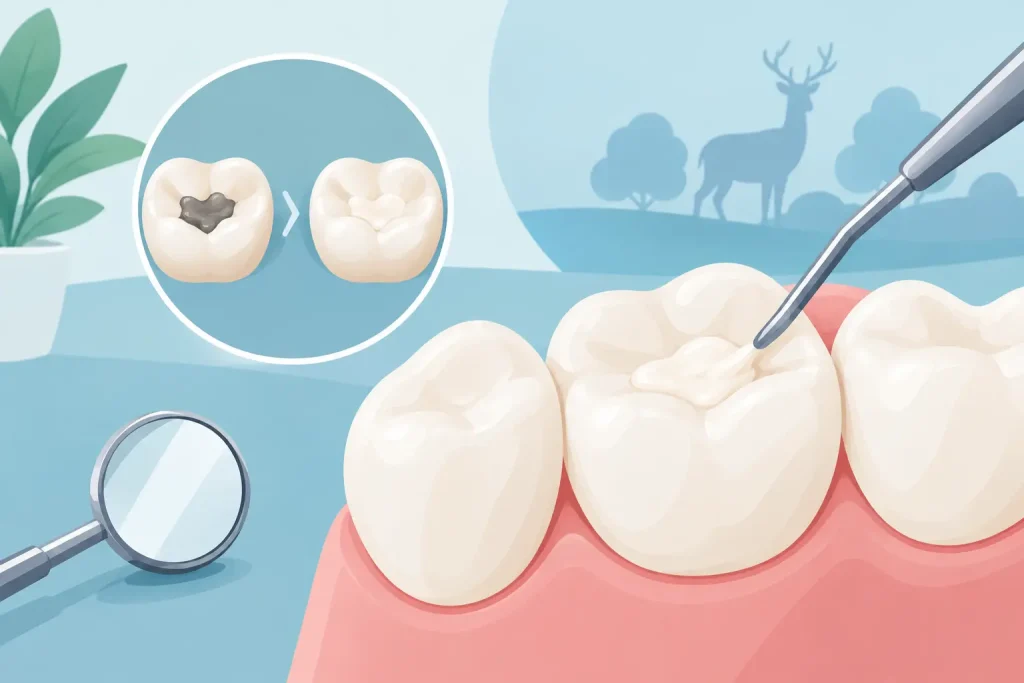
A small cavity, chipped edge or worn filling can feel easy to put off, especially when it is not painful. But treating it early is often the simplest way to protect more of your natural tooth. If you are looking for tooth coloured fillings Deer Park residents can access close to home, it helps to understand what the treatment involves, when it is suitable and how it can support a healthy, natural-looking smile.
Tooth coloured fillings are made from composite resin, a durable material selected to blend with the shade of your tooth. They are commonly used to repair decay, replace older fillings, restore minor chips and close small areas of damage. The goal is not simply to fill a hole. It is to restore the tooth carefully, preserve as much healthy structure as possible and make sure your bite feels comfortable.
What are tooth coloured fillings?
Composite resin is a dental material made from a blend of resin and finely ground ceramic-like particles. Your dentist selects a shade that suits the surrounding tooth, then places and shapes the material in layers. A curing light hardens each layer, allowing the filling to be polished and adjusted during the same appointment in many cases.
Unlike traditional silver-coloured amalgam fillings, composite fillings are designed to be discreet. They can be particularly useful on front teeth, where appearance matters, but they are also widely used on back teeth. Whether they are the right choice for you depends on the size and position of the restoration, your bite, your risk of further decay and how much healthy tooth remains.
A filling is a restorative treatment, not a cosmetic shortcut. It may improve the appearance of a damaged tooth, but its primary purpose is to seal and strengthen an area affected by decay or damage before the problem becomes more involved.
When might you need a filling?
Tooth decay can begin quietly. You may not feel anything until it has progressed deeper into the tooth, which is why regular examinations are so valuable. During a check-up, your dentist looks for early changes in enamel, signs of wear around existing fillings and areas where plaque is more likely to build up.
You may benefit from an assessment sooner if you notice sensitivity to cold, sweets or biting pressure, food catching between teeth, a rough edge, a dark spot, or a filling that feels cracked or loose. A chipped tooth following a knock or biting something hard also deserves attention, even if there is no immediate pain.
Not every early area of decay needs a filling straight away. In some situations, improved brushing, fluoride support, dietary changes and monitoring may be enough to slow or stop early decay. This prevention-first approach avoids treatment that is not yet necessary while ensuring changes are watched carefully.
The process for tooth coloured fillings in Deer Park
A calm, unhurried appointment can make restorative care much easier, particularly if dental treatment has made you anxious in the past. Your dentist should begin by explaining what they can see, why treatment may be recommended and what alternatives are available.
If a filling is appropriate, the tooth and surrounding gum are numbed with local anaesthetic where needed. The decayed or weakened material is removed conservatively, and the area is cleaned before the composite is placed. The filling is built in small layers, shaped to fit the tooth and hardened with a curing light.
Finally, your dentist checks how the tooth meets its opposing teeth when you bite. This step matters. A filling that is even slightly too high can make the tooth feel tender or create discomfort when chewing. Small adjustments can usually be made immediately to help the restoration feel natural.
Most straightforward fillings are completed in one visit. More extensive damage may need a different approach, such as a crown, an onlay or root canal treatment, especially when there is too little sound tooth structure left for a filling to be reliable.
Comfort and clear communication matter
Gentle care is about more than the anaesthetic. It includes taking time to check that you are comfortable, explaining each stage in plain language and giving you the opportunity to pause if needed. If you are nervous, mention this before treatment begins. A caring dental team can tailor the pace of the appointment and help you feel more in control.
At Tooth Shine Dental, recommendations are based on your individual tooth, gum health and long-term needs, rather than a rushed, one-size-fits-all approach. You should also receive a clear explanation of expected fees before proceeding, so you can make an informed decision without pressure.
How long do composite fillings last?
There is no single lifespan for a tooth coloured filling. Some last for many years, while others need repair or replacement sooner. Longevity depends on the size of the filling, the tooth involved, the forces placed on it, your oral hygiene and whether you grind or clench your teeth.
Large fillings in back teeth generally work harder than small fillings in less heavily loaded areas. If you clench at night, a protective night guard may be recommended to reduce stress on both your teeth and restorations. Regular dental reviews allow small concerns, such as wear at the edge of a filling, to be addressed before they turn into cracks or recurrent decay.
Good daily habits make a real difference. Brush twice a day with fluoride toothpaste, clean between your teeth daily and keep sugary snacks and drinks to mealtimes where possible. Composite fillings do not decay, but the tooth around their edges still can.
Are tooth coloured fillings always the best option?
Composite is versatile, but it is not automatically the best treatment for every tooth. A very large cavity, deep crack or heavily weakened tooth may need more protection than a filling can provide. In those cases, an onlay or crown may be a stronger long-term option.
There are also times when no drilling is the best choice. Early enamel changes can sometimes be managed with prevention and review rather than immediate restoration. The right decision depends on clinical findings, your future risk of decay, your preferences and the balance between preserving tooth structure now and avoiding a predictable failure later.
Replacing sound older amalgam fillings purely for appearance is another decision that should be made thoughtfully. If an existing filling is intact, the surrounding tooth is healthy and there are no concerns on examination or X-rays, monitoring may be appropriate. If it is cracked, leaking, worn or associated with decay, replacement may be recommended.
Aftercare following a filling
Your mouth may remain numb for a few hours after local anaesthetic. Take care with hot drinks and avoid chewing until normal feeling returns, especially for children, who can accidentally bite their lip or cheek while numb.
It is normal for a recently restored tooth to feel mildly sensitive to cold or pressure for a short time. This should gradually settle. Contact your dentist if pain is strong, worsens, keeps you awake, lasts beyond a few days, or if your bite feels uneven. A simple bite adjustment can sometimes resolve persistent tenderness.
A tooth coloured filling should feel smooth and comfortable, not like an obstacle when you eat or speak. If something does not feel right, it is always worth getting it checked rather than hoping it settles on its own.
A practical choice for family smiles
For adults and children alike, early treatment can prevent a small concern from becoming a painful, costly problem. Children may need fillings in baby teeth as well as adult teeth, depending on the location of decay and how long the tooth is expected to remain. Keeping baby teeth healthy supports comfortable eating, speech and space for adult teeth to erupt.
The most helpful next step is often a thorough examination, not an assumption that every mark or sensitivity needs a filling. With an individual assessment, clear options and time to ask questions, you can choose care that protects your smile now and supports it for years to come.