
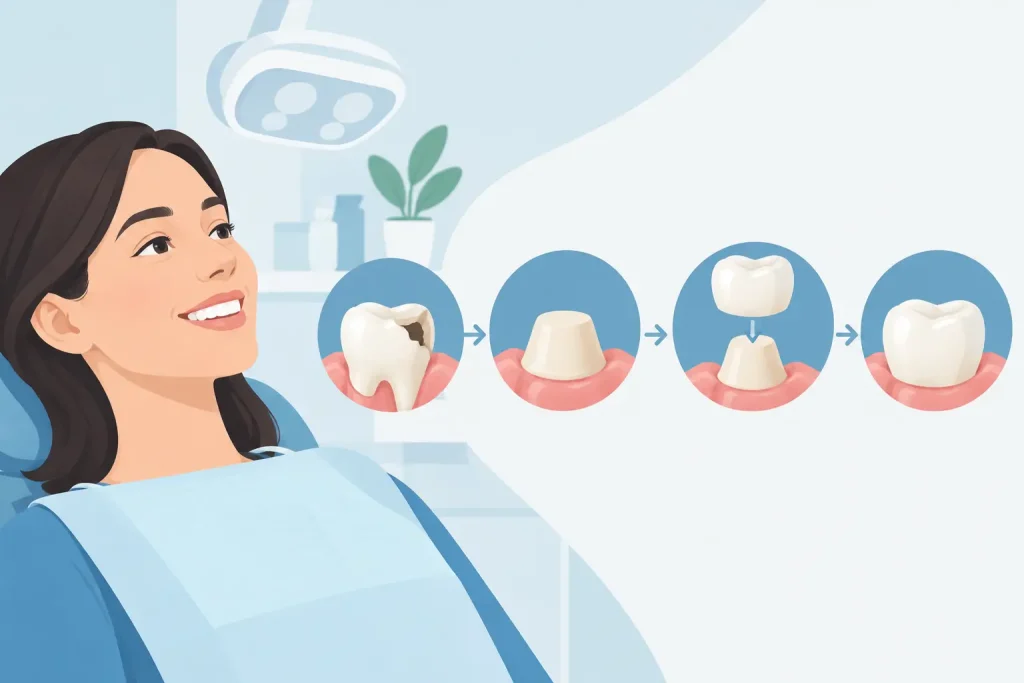
A tooth can look fine from the outside while a large crack, old filling or decay has weakened it underneath. That is often when a dental crown procedure may be recommended: not simply to improve appearance, but to protect the remaining healthy tooth structure from breaking further.
For many people, the thought of a crown brings questions about drilling, appointments, cost and whether the tooth can be saved at all. Gentle, thoughtful dentistry starts with slowing down enough to answer those questions. A crown is a significant restoration, so the right choice depends on your tooth, gums, bite and long-term goals.
When might a crown be needed?
A dental crown is a custom-made covering that fits over the visible part of a tooth, restoring its shape, strength and function. It may be suitable when a tooth has a large filling with little natural structure left, is cracked or badly worn, has been weakened after root canal treatment, or needs support as part of a bridge.
Crowns can also improve the appearance of a tooth that is severely discoloured, misshapen or damaged. However, a crown is not automatically the best answer for every cosmetic concern. If the tooth is otherwise strong, whitening, bonding or a veneer may be less invasive. If a tooth cannot be predictably restored, removal and replacement options may need to be discussed instead.
Healthy gums are essential before placing a crown. Active gum disease, bleeding gums or heavy plaque build-up can affect the fit of the crown and the health of the tooth supporting it. Your dentist may recommend gum treatment or a period of improved home care first. This prevention-led approach helps protect the investment you make in restorative treatment.
The dental crown procedure, step by step
1. A careful assessment and treatment plan
Your appointment usually begins with a conversation about your symptoms and goals. Is the tooth painful when biting? Has a filling repeatedly broken? Are you concerned about appearance? Your dentist will examine the tooth, surrounding gums and bite, and may take dental X-rays or digital scans to see what is happening below the surface.
This assessment helps determine whether the nerve is healthy, whether there is a crack extending below the gumline, and whether enough sound tooth remains to support a crown. You should also be told about reasonable alternatives, the likely benefits, limitations and expected costs before treatment begins.
Sometimes the best first step is monitoring a small crack, replacing a filling, treating decay or completing root canal treatment. There is value in preserving healthy tooth structure whenever possible.
2. Preparing the tooth
If a crown is the right option, the tooth is numbed with local anaesthetic so you should be comfortable throughout treatment. Your dentist gently reshapes the outer surface of the tooth to create space for the crown material. Any old filling, decay or weakened structure is removed at the same time.
If there is not enough tooth structure remaining, the tooth may need to be built up with a filling material before the crown is placed. In some cases, a deeper supporting procedure may be required. Your dentist will explain this clearly if it applies to you rather than discovering extra treatment without discussion.
The amount of preparation varies. A heavily broken-down molar will usually need more support than a tooth requiring a conservative cosmetic crown. Modern materials and digital planning can allow for more conservative preparation in suitable cases, but a crown still requires permanent alteration of the tooth.
3. Scans or impressions, then a temporary crown
Once the tooth is prepared, your dentist records its shape and the way your teeth bite together. This may be done using a digital scanner or traditional impression material. The information is used by a dental laboratory to make a crown designed for your mouth.
A temporary crown is commonly placed to protect the prepared tooth between appointments. It is not as strong as the final restoration, so it is wise to avoid sticky foods such as toffee and very hard foods on that side. Temporary crowns can occasionally come loose. Keep it safe if you can and contact the practice for advice rather than trying to glue it back yourself.
Some suitable cases may be planned for same-day crown technology. This is not appropriate for every tooth or every clinical situation, particularly where more complex laboratory work, detailed shade matching or gum healing is needed. The goal is not to rush the process, but to use technology where it supports a precise, long-lasting result.
4. Fitting the final crown
At the fitting appointment, your dentist checks the crown’s shape, colour, contact points and bite before cementing it. The crown should feel natural when you close your teeth together and should allow you to clean around it properly.
It is normal to need a small adjustment to the bite. A crown that is even slightly high can make a tooth feel tender when chewing, so speak up if it does not feel right. Once the fit is confirmed, the crown is bonded or cemented into place.
Choosing a crown material
There is no single best material for every person. The choice is guided by the tooth’s position, your bite, the amount of remaining tooth structure, appearance and budget.
Ceramic and porcelain crowns are popular because they can closely match natural teeth and are often used for front teeth and visible areas. Zirconia is a strong ceramic option that can suit back teeth and people who clench or grind. Porcelain fused to metal crowns have a long clinical history and may still be appropriate in selected situations, though a dark line near the gum can sometimes become visible over time.
Gold alloy crowns are durable and kind to opposing teeth, but their appearance means they are generally chosen for less visible areas. Your dentist should explain why a particular material is being suggested for your tooth, rather than presenting every crown as identical.
Does a crown hurt, and how long does it take?
The procedure itself should not be painful while local anaesthetic is working. You may experience temporary sensitivity around the tooth or gum afterwards, particularly once the numbness wears off. Over-the-counter pain relief may help when appropriate for you, but follow the advice on the packet and any guidance from your dentist or pharmacist.
A traditional crown usually involves two appointments, often separated by one to three weeks while the laboratory makes the crown. Timing can vary depending on the complexity of the case and whether other treatment is needed first. Same-day treatment may be possible for selected cases, but suitability matters more than speed.
If you feel strong or worsening pain, prolonged sensitivity to hot or cold, swelling, or pain when biting after your crown is fitted, contact your dentist. Occasionally a bite adjustment is all that is needed. In other cases, the tooth nerve may have been more compromised than it first appeared and require further care.
Looking after your crowned tooth
A crown does not decay, but the natural tooth edge beneath it can still develop decay, and the gums around it can still become inflamed. Daily brushing with fluoride toothpaste and cleaning between the teeth are essential. Your dentist or hygienist can show you the best method for your crown, especially if it is part of a bridge.
Avoid using your teeth to open packaging or biting very hard objects such as ice. If you clench or grind your teeth, a custom night guard may help protect both the crown and your natural teeth. Regular check-ups allow small issues, such as a worn edge or early gum inflammation, to be managed before they become more complex.
With good home care, healthy gums and routine maintenance, a crown can last for many years. Its lifespan is influenced by your bite, diet, grinding habits, the original condition of the tooth and how well the crown can be kept clean. No dentist can promise that a crown will last forever, but careful planning gives it the best chance.
Making a decision you feel comfortable with
At Tooth Shine Dental, a crown recommendation should come with a clear explanation of what your tooth needs now and what may be needed later. Ask to see the X-rays or scans, ask what alternatives exist, and ask what happens if you wait. Those are sensible questions, not difficult ones.
A well-planned crown can help you chew comfortably and keep a compromised tooth in service for years. Taking the time to understand the diagnosis first is often the most reassuring part of the process.