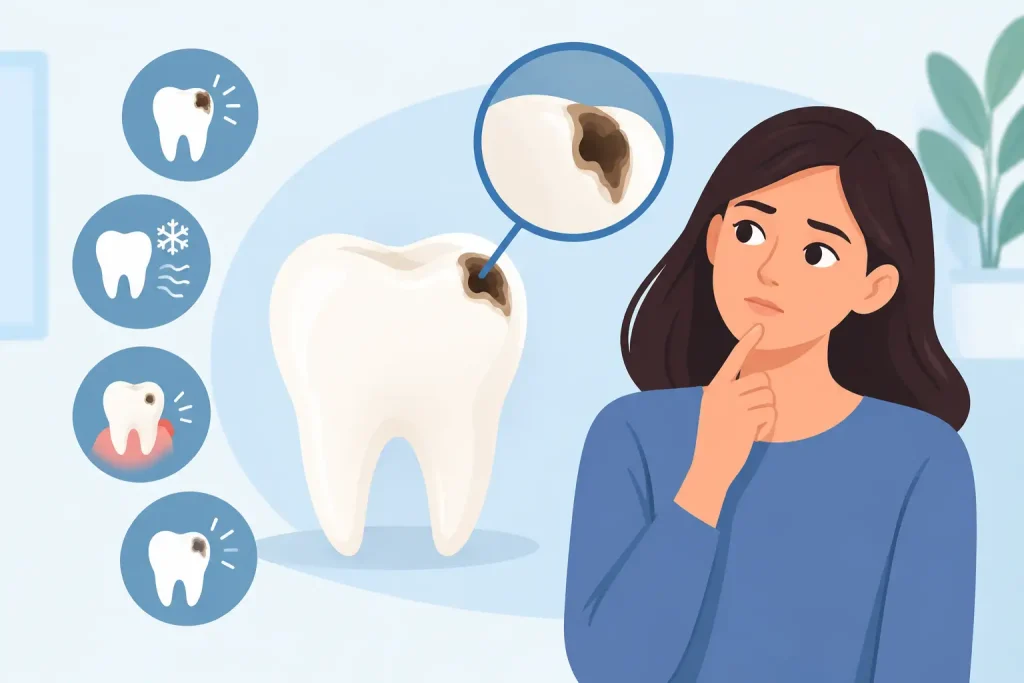
A cavity does not usually begin with a dramatic toothache. It often starts quietly: a faint white patch near the gumline, a brief twinge when you sip something cold, or food catching in a place it never used to. Knowing the signs of early tooth decay can give you the best chance to stop a small problem before it becomes painful, more complex and more costly to treat.
Tooth decay is common in children and adults, but it is not simply a matter of brushing harder. Your individual risk can be affected by diet, dry mouth, past dental work, tooth shape, gum health, medications and how often plaque is removed. A careful dental examination can identify changes that are easy to miss at home and help you make a practical plan for protecting your smile.
What early tooth decay actually is
Tooth decay happens when bacteria in dental plaque use sugars from food and drinks to produce acids. These acids gradually draw minerals out of the enamel, which is the hard outer layer of the tooth. At this early stage, the damage may be reversible with improved home care, fluoride and changes to daily habits.
If the acid attacks continue, enamel can break down and form a cavity. Decay may then travel into the softer layer beneath the enamel, called dentine. This is when sensitivity and discomfort are more likely. Once decay reaches the nerve inside the tooth, severe pain, infection and more involved treatment can follow.
The goal is not to alarm you. It is to act early, when the solution may be as straightforward as targeted prevention or a small filling rather than treatment for a badly damaged tooth.
Signs of early tooth decay to look for
White, chalky or brown patches
One of the earliest visible changes is a white, chalky-looking area on the tooth. It may appear duller than the surrounding enamel, particularly around the gumline, between teeth or near braces and older fillings. This can indicate that minerals are being lost from the enamel.
As decay progresses, a spot may become yellow, brown or black. A dark mark is not always active decay – staining in the grooves of a tooth can look similar – but it deserves a professional check rather than guesswork.
Sensitivity to cold, sweet or hot foods
A quick sharp sensation from cold water, ice cream, sweet foods or hot drinks can be an early warning sign. The feeling may come and go, and it can be tempting to avoid that side of your mouth and hope it settles.
Sensitivity has several possible causes, including exposed tooth roots, worn enamel, a cracked tooth or gum recession. Decay is one possibility, so a check-up is the safest way to understand what is happening.
Food catching between or on teeth
If meat, bread or fibrous foods repeatedly catch in the same spot, the tooth surface or contact point may have changed. A small cavity between teeth can create a ledge where food collects. It could also be related to a chipped tooth, a worn filling or gum changes.
Flossing should not be painful or constantly shred the floss. If it does, mention it at your appointment. This small detail can help your dentist assess areas that are difficult to see directly.
A rough edge, small pit or hole
Run your tongue over your teeth and you may notice a rough patch, a new dip or an edge that feels different. A visible hole usually means decay has moved beyond its earliest stage, even if there is no pain yet.
Do not use sharp objects to investigate it. This can damage the tooth or irritate the gums. Book an examination instead, particularly if the area feels sharp or traps food.
Persistent bad breath or an unpleasant taste
Bad breath is often linked with plaque build-up, gum inflammation, dry mouth or food trapped between teeth. Decay can also contribute, especially when bacteria are collecting in a cavity or around a leaking filling.
A lingering bad taste, even after brushing, is worth discussing. It is not always decay, but it is a sign that your mouth may need closer attention.
Mild toothache or pressure when biting
Early decay does not always hurt, which is why regular check-ups matter. When discomfort does begin, it may feel like a mild ache, pressure when biting, or a twinge that disappears quickly. Pain that wakes you at night, lingers after hot or cold drinks, or comes with facial swelling needs prompt dental care.
Why decay can be hard to spot at home
The parts of teeth we see in the mirror are only part of the picture. Decay commonly develops between teeth, under the edge of an older filling, in deep grooves on back teeth or below the gumline. These areas may look normal until the decay is more advanced.
Dental X-rays can reveal decay between teeth and beneath existing restorations before a cavity becomes obvious. Your dentist will only recommend X-rays when they are clinically appropriate, taking your age, dental history and individual risk into account.
Children need particular attention because newly erupted adult molars have deep grooves and may be harder to clean thoroughly. Young children may not mention sensitivity clearly, so parents might instead notice reluctance to chew, complaints about cold foods, food pockets or changes in brushing habits.
When a white spot can still be treated without a filling
An early enamel lesion does not automatically need drilling. If the enamel surface is still intact, your dental team may recommend a prevention-focused plan to help remineralise it. This might include professional fluoride treatment, fluoride toothpaste suited to your needs, a review of brushing technique and advice about how often sugary or acidic drinks and snacks are consumed.
Frequency matters as much as quantity. Sipping soft drink, cordial, sports drinks or sweetened coffee over several hours exposes teeth to repeated acid attacks. Keeping these drinks to mealtimes where possible and choosing water between meals can make a meaningful difference.
For children, brushing twice daily with an age-appropriate fluoride toothpaste is a strong foundation. Adults may need extra support if they have dry mouth, gum recession, frequent snacking, reflux, or a history of cavities. Your plan should reflect your actual risk, not a one-size-fits-all routine.
What happens at a dental check-up
A calm, thorough check-up looks beyond whether there is a hole in a tooth. Your dentist will assess the teeth, gums, bite, existing fillings and crowns, and areas where plaque is collecting. They may also discuss sensitivity, diet, dry mouth, brushing and flossing habits, and whether you have noticed any of the early signs.
At Tooth Shine Dental, this prevention-led approach includes taking time to explain what is found in plain language. If treatment is needed, you can talk through the options, likely timing and costs before making a decision. For suitable early changes, monitoring and prevention may be appropriate. For an active cavity, a filling can protect the remaining tooth structure before the damage grows.
Professional cleaning also helps remove hardened plaque deposits that cannot be brushed away at home. Healthy gums make it easier to keep teeth clean and support long-term oral health.
When to arrange an urgent appointment
Book promptly if you have a persistent toothache, swelling in the face or gums, fever, a broken tooth, pus, or pain when biting. These symptoms can indicate deeper decay or infection and should not be managed with pain relief alone.
For a chipped or broken tooth, keep any pieces you can find and avoid chewing on that side. If there is swelling or trouble swallowing or breathing, seek urgent medical help immediately.
Small daily habits that protect teeth
Brush twice a day with fluoride toothpaste, cleaning gently along the gumline and every tooth surface. Clean between teeth once a day with floss or interdental brushes, depending on the spaces between your teeth. Spit after brushing rather than rinsing straight away, so the fluoride can stay on the teeth longer.
Water is the kindest everyday drink for teeth. Try to limit frequent sugary snacks and drinks, and avoid brushing immediately after acidic foods or drinks because enamel is temporarily softer. Waiting about 30 minutes is usually a sensible approach.
If something about a tooth feels different, you do not need to wait for severe pain to get it checked. A gentle examination now can offer reassurance, catch early decay when options are simpler, and help keep your smile comfortable for the years ahead.