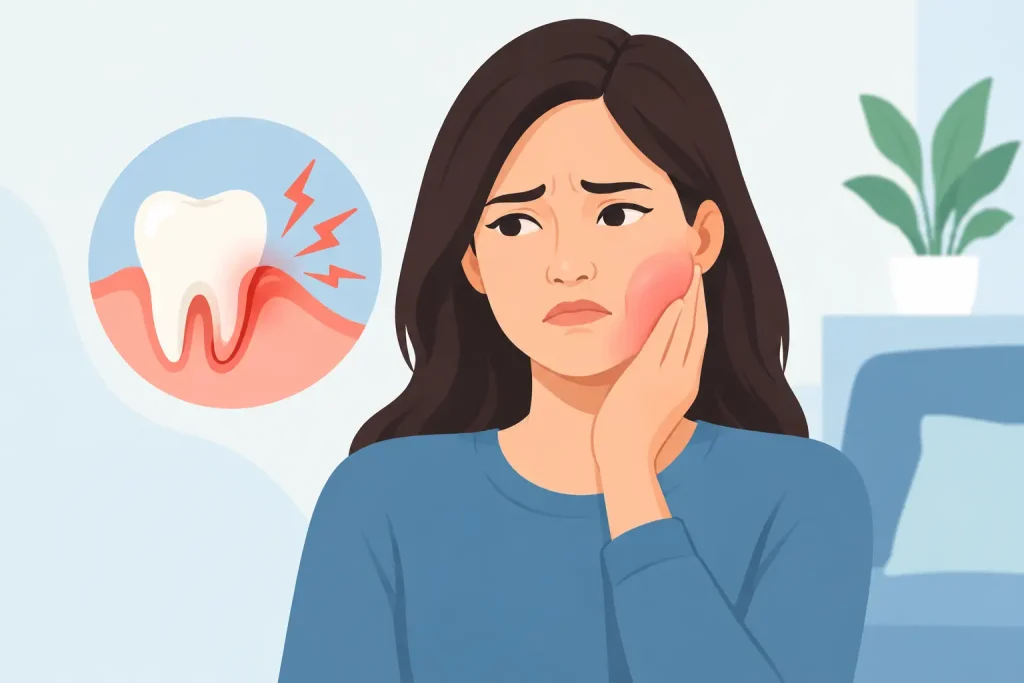
A toothache with facial swelling is more than an uncomfortable dental problem to wait out. Swelling can be a sign that infection or inflammation has spread beyond the tooth or gum, and it needs prompt assessment. The right next step depends on where the swelling is, how quickly it is changing and whether you have symptoms that affect breathing, swallowing or your general health.
Why a toothache can cause facial swelling
A tooth has a small living centre containing nerves and blood vessels. When deep decay, a crack, trauma or advanced gum disease allows bacteria to reach this tissue, an infection can develop around the root. Pressure builds inside the tooth and surrounding bone, causing a persistent or throbbing toothache. As infection spreads into the nearby soft tissues, the gum, cheek, jaw or area beneath the eye may become swollen.
A troublesome wisdom tooth can also cause a painful swollen jaw, particularly when a flap of gum around a partly erupted tooth traps food and bacteria. In some cases, swelling comes from a gum abscess rather than the tooth itself. A careful examination and dental X-rays help identify the source, because the treatment for a cracked tooth, gum infection and impacted wisdom tooth is not always the same.
Pain is not a reliable measure of seriousness. Occasionally, a toothache eases when the nerve inside the tooth stops responding, while infection continues around the root. Facial swelling, a bad taste, pus, fever or increasing tenderness are all reasons to arrange urgent dental care.
Toothache with facial swelling: when to seek emergency help
Contact a dentist as soon as possible if you have a toothache and any swelling of the face, jaw or gums. Same-day assessment is often appropriate, especially if the swelling is getting larger, the tooth is difficult to bite on or you feel unwell.
Go to a hospital emergency department or call 000 immediately if you have trouble breathing or swallowing, swelling spreading towards your eye or neck, difficulty opening your mouth, a high fever, confusion, or you cannot manage fluids. These symptoms can indicate a spreading infection that requires urgent medical care. Do not drive yourself if you feel faint, very unwell or your breathing is affected.
For babies, young children, older adults and people with a weakened immune system, it is sensible to act early. Children may not be able to describe their symptoms clearly. Refusing food, unusual irritability, dribbling, a swollen cheek or a fever should not be dismissed as simply teething.
What you can do while arranging care
The aim at home is to stay comfortable and avoid making the area worse while you organise an appointment. Rinse gently with warm salty water if you can do so comfortably, then spit it out. Keep the mouth as clean as possible with a soft toothbrush, avoiding aggressive brushing around a very sore area.
A cold pack wrapped in a clean cloth can be held against the outside of the cheek in short intervals to help with swelling and discomfort. Choose soft foods, chew on the other side where possible and drink water regularly. Avoid smoking and alcohol, which can irritate tissues and interfere with healing.
Over-the-counter pain relief may help when taken exactly as directed on the packet and only if it is suitable for you. If you are pregnant, have medical conditions, take regular medicines, or are unsure what you can safely take, ask a pharmacist, doctor or dentist first. Never place aspirin, pain-relief tablets, alcohol or essential oils directly onto the gum or tooth. These can burn the delicate tissues without treating the cause.
Heat packs are also best avoided when facial swelling may be due to infection. Heat can increase blood flow and may make swelling feel worse. Do not try to pop, squeeze or drain a swelling yourself.
Why antibiotics alone may not fix the problem
Antibiotics can be necessary when a dental infection is spreading or there are signs of systemic illness. However, they do not remove the source of most dental infections. If bacteria remain inside an infected tooth, beneath the gum or around a wisdom tooth, symptoms can return after the medicine is finished.
Definitive treatment may involve draining an abscess, cleaning the tooth with root canal treatment, treating the gum infection, repairing a damaged tooth or removing a tooth that cannot be predictably saved. Your dentist should explain what they can see, why a particular option is recommended and what the alternatives involve.
Saving a natural tooth is often preferred when its long-term outlook is sound. Yet extraction may be the safer choice if the tooth is severely cracked, has extensive decay below the gum line or lacks enough healthy structure to restore. There is no one-size-fits-all answer. A thoughtful plan considers your pain, infection risk, gum health, X-ray findings, budget and the likely durability of each option.
What happens at an urgent dental appointment
When you attend with a swollen face or jaw, the first priority is safety. Your dentist will ask when the pain and swelling began, whether it has changed quickly, and whether you have fever, difficulty swallowing or relevant medical conditions. They will examine your teeth, gums and surrounding tissues, and may take digital X-rays to locate infection, decay, cracks or wisdom tooth concerns.
If treatment can be safely started that day, the dentist will discuss it before proceeding. This may include releasing pressure from an infected tooth, drainage, temporary stabilisation of a broken tooth, or treatment around an inflamed wisdom tooth. If you need a more involved procedure, you should leave with clear advice about the next step, pain management and what symptoms mean you need urgent medical attention.
At Tooth Shine Dental, urgent appointments are approached with the same calm, personalised care as planned visits. The goal is not only to settle the immediate problem, but also to understand why it occurred and help reduce the chance of another painful episode.
Reducing the risk of another dental infection
Not every toothache can be prevented, particularly after an accident or when an old filling cracks unexpectedly. Still, routine check-ups make it easier to find small cavities, leaking restorations, gum problems and wisdom tooth changes before they become emergencies.
Healthy gums matter here too. Gum disease can create deep pockets where bacteria collect, and untreated inflammation can loosen teeth and lead to abscesses. Professional cleaning, individual gum assessments and daily cleaning advice can protect the supporting tissues around your teeth.
At home, brush twice a day with fluoride toothpaste and clean between your teeth daily using the method that suits your mouth, such as floss or interdental brushes. If a tooth has become sensitive to cold, hurts when biting, repeatedly develops a pimple-like bump on the gum or has a loose filling, book an appointment before swelling starts.
A painful problem deserves a clear plan
Facial swelling can feel frightening, especially when pain has kept you awake or a child is distressed. Prompt care gives the best chance of controlling infection, easing discomfort and preserving as much healthy tooth structure as possible. If swelling is present, contact a dentist today, and seek emergency medical help straight away if breathing, swallowing or your general wellbeing is affected.