
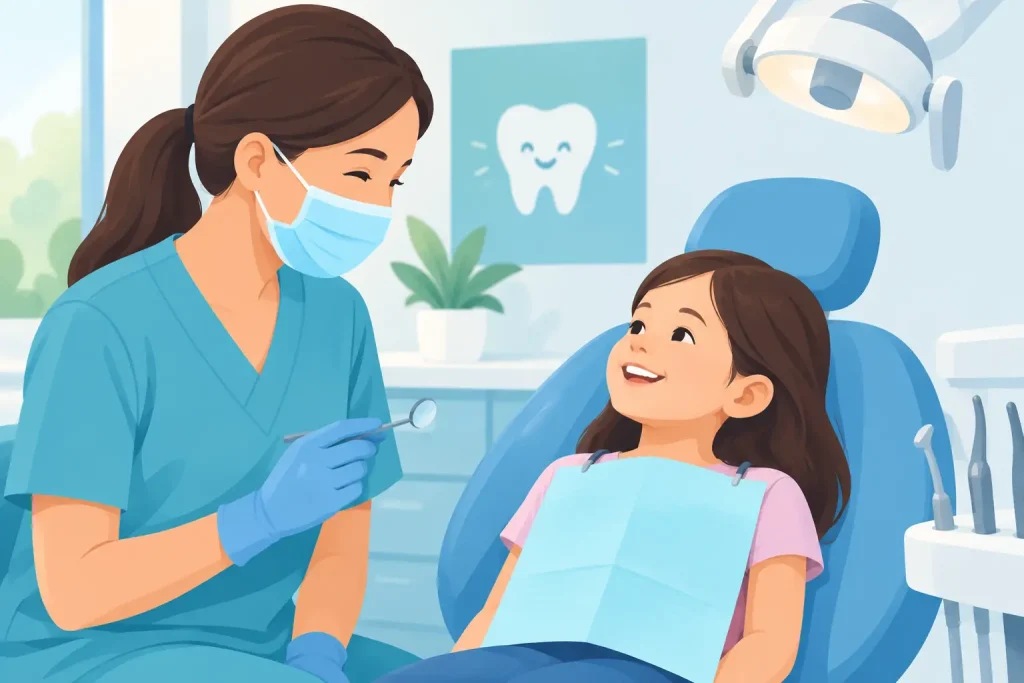
A first tooth can appear quickly, often before a parent has had time to buy a toothbrush that feels small enough. That is why the best age for first dentist visit is usually earlier than many families expect: by your child’s first birthday, or within six months of their first tooth coming through.
This first visit is not about searching for problems or putting a young child through treatment. It is a gentle introduction to the dental chair, a chance to check that teeth and gums are developing well, and an opportunity for you to ask practical questions before small concerns become uncomfortable ones.
The best age for a first dentist visit
Most children should have their first dental check-up by 12 months of age. If the first tooth arrives earlier, booking within six months is a sensible guide. Baby teeth matter from the beginning. They help children chew, speak clearly, hold space for adult teeth and develop confidence with smiling.
Early visits also allow a dentist to look for concerns that can be easier to manage when found early, including early decay, enamel changes, feeding-related risks, thumb or dummy habits, and signs that the jaws or bite may need monitoring.
There is no need to wait until all baby teeth have appeared, or until your child can sit still for a long appointment. In fact, a visit before there is pain or an obvious problem is often far more relaxed for everyone.
When to book sooner
Book an appointment promptly if you notice brown, white or chalky patches on teeth, persistent bad breath, bleeding gums, a chipped or knocked tooth, swelling, toothache, or difficulty eating. Children who take regular medicines, have ongoing medical conditions, or sleep with a bottle containing milk, formula or juice may also benefit from earlier personalised advice.
If a baby tooth has not appeared by around 18 months, it is worth mentioning at a check-up. Often there is no cause for concern, but a dentist can assess development in the context of your child’s overall health and family history.
Why an early visit can make later care easier
Children do not automatically fear the dentist. They learn what to expect from the experiences around them. A calm, brief first visit helps make dental care feel ordinary, much like a visit to the GP or haircut.
At Tooth Shine Dental, we take a slow, gentle approach with children. That may mean letting your child watch a sibling or parent have a check-up first, sitting on your lap, counting teeth together, or simply becoming familiar with the room. Some children are ready for a full examination straight away; others need a little more time. Both are completely normal.
The goal is trust, not rushing. A positive start can make routine check-ups easier as your child grows, particularly if they ever need help with a broken tooth, decay or orthodontic assessment later on.
What happens at a child’s first dental appointment?
A first visit is usually simple and tailored to your child’s age, confidence and needs. The dentist will gently look at the teeth, gums, tongue and bite, checking how everything is developing. We will also talk with you about brushing, diet, fluoride and any habits you have noticed.
For a toddler, the examination may happen while they sit on a parent’s lap. For an older child, we may encourage them to sit independently and take part by opening wide, choosing a flavour, or listening to the dental chair move. There is no benefit in forcing a child through an appointment when they are distressed. A calm first experience is more valuable than completing every step in one visit.
X-rays are not routinely needed at a first visit. They are recommended only when clinically useful, such as where there is concern about decay between teeth, injury, pain or development that cannot be assessed clearly by looking alone.
How to prepare your child without making it a big event
Keep the conversation positive and matter-of-fact. You might say, “The dentist is going to count your teeth and make sure your smile is healthy.” Avoid promising that nothing will happen or saying “It won’t hurt”, especially when your child has not expressed worry. Those phrases can accidentally suggest there is something to fear.
Choose an appointment time when your child is usually rested and not hungry. Bring along a comfort toy if that helps, and allow enough time so the visit does not feel rushed between childcare drop-off, work and other commitments.
It also helps to model calm language yourself. If you are anxious about dental visits, you do not need to hide your feelings perfectly, but try to avoid sharing frightening stories in front of your child. Let the dental team explain things in child-friendly terms and move at a pace that feels manageable.
Daily habits that protect baby teeth
The first appointment works best alongside simple routines at home. From the first tooth, brush twice a day with a soft, age-appropriate toothbrush and a small smear of children’s fluoride toothpaste. Once your child turns 18 months, use a pea-sized amount. Encourage them to spit out after brushing, rather than rinsing, so fluoride can keep working on the enamel.
Water is the best everyday drink. Frequent sipping on juice, cordial, soft drink, flavoured milk or sweetened drinks exposes teeth to sugar and acid repeatedly, even when the amount in each cup seems small. Milk and water are better choices with meals, while water is ideal between them.
Try not to put a child to bed with a bottle containing anything other than water. During sleep, saliva flow reduces, which means sugars from milk, formula or other drinks can sit on teeth for longer. If your child uses a dummy, avoid dipping it in honey, sugar or other sweet foods.
Parents should do the brushing at first, then gradually supervise as their child learns. Most children need help brushing thoroughly until about eight years of age, sometimes longer. Good brushing is a skill that develops with practice, not a test of independence.
What about orthodontic checks and adult teeth?
An early dental visit does not mean your child needs orthodontic treatment. It does mean their growth can be observed over time. A dentist may notice crossbites, crowding, prolonged dummy use, mouth breathing, early loss of baby teeth or jaw-growth patterns that deserve monitoring.
The Australian Dental Association recommends an orthodontic assessment around age seven, when adult front teeth and first molars are generally present. Some concerns are best watched, while others can benefit from early intervention. The right timing depends on the child, the type of bite concern and how their jaws are growing.
As adult teeth emerge, regular check-ups remain useful for preventive care, fissure sealants where suitable, brushing support and checking gum health. Healthy gums are just as important for children as they are for adults.
If your child is older and has never been to the dentist
It is never too late to start. Some families have moved, been busy, had cost concerns or simply not realised how early a first visit is recommended. There is no judgement in booking now.
Let the clinic know if your child is nervous, has sensory needs, has had a difficult medical experience, or has a sore tooth. This allows the team to plan a gentler, more appropriate appointment. If treatment is needed, you should receive a clear explanation of the findings, options, likely costs and what can safely wait.
A first dental visit is a small step that can protect much more than teeth. It gives your child a familiar place to turn when they need care, and gives you practical guidance for keeping their growing smile comfortable, healthy and confident.