
A child’s first teeth may be small, but they play a big part in eating, speaking, sleeping and making room for adult teeth. Learning how to clean a child’s teeth well from the beginning helps prevent tooth decay and builds a routine that feels normal rather than stressful. The aim is not perfection at every brush. It is gentle, consistent care that protects their smile and gives them confidence.
How to clean child teeth from the first tooth
Start cleaning your child’s mouth before teeth appear by gently wiping their gums with a clean, damp cloth after feeds. Once the first tooth comes through, use a small, soft children’s toothbrush and clean twice a day – after breakfast and before bed.
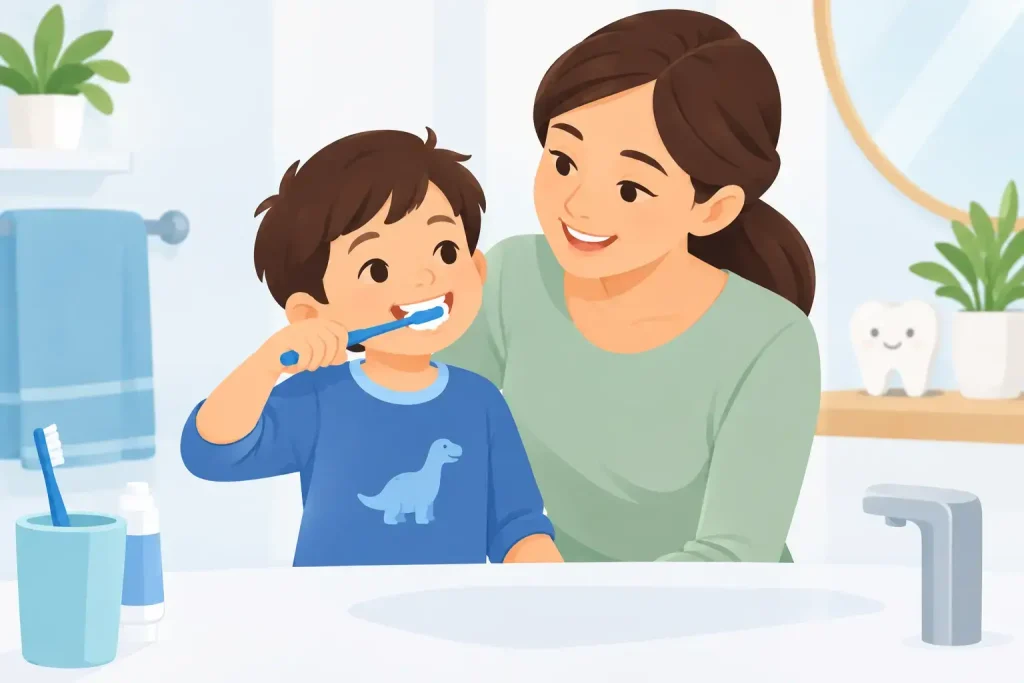
Sit or stand in a position where you can see clearly. For many toddlers, this means sitting them on your lap with their head resting against your chest, or standing behind them in front of a mirror. Use small circular movements along the gumline, then gently brush the chewing and inside surfaces of each tooth.
Use an age-appropriate fluoride toothpaste. The right amount and fluoride strength can depend on your child’s age, their risk of decay and whether they can reliably spit, so ask your dentist for individual advice. In general, young children need only a very small amount of toothpaste. Encourage them to spit out the excess once they are able, rather than rinsing straight away, so the fluoride can keep working on the teeth.
Children need an adult to do the brushing properly for longer than many parents expect. Letting them have a turn helps them learn, but follow with your own careful brush. Most children do not have the hand control to clean effectively on their own until about eight years old, and some need help for longer.
A simple routine for each age
The technique stays much the same, but your role changes as your child grows. Babies and toddlers need complete help. Preschool-aged children can begin holding the brush and copying you, while you finish the job. School-aged children can brush independently with supervision and a final check.
Make brushing part of the same predictable sequence each day. For example, brush after breakfast, then brush after pyjamas, toilet and story time in the evening. A two-minute timer, a favourite song or a visual chart can make the routine easier without turning it into a battle.
If your child resists brushing, keep your tone calm. Forcing their mouth open or turning every brush into a struggle can make dental care harder over time. Instead, offer limited choices: “Would you like the blue toothbrush or the green one?” or “Do you want to brush first, or shall I?” Consistency matters more than a perfect two minutes on a difficult night. Try again at the next opportunity.
Brushing around the gumline matters
Plaque is a soft, sticky film that gathers where teeth meet the gums and between teeth. If it is not removed regularly, it feeds on sugars from food and drinks and produces acids that can weaken enamel. This is how decay begins.
For children, decay can develop quickly, particularly on back teeth and between teeth where a toothbrush cannot reach as well. Brush all sides of every tooth, paying special attention to the back molars. Lift the lip occasionally to check the front teeth near the gums, where early changes can be easier to spot.
When to begin flossing
Start cleaning between teeth when two teeth touch closely together. A toothbrush cannot clean a tight contact point properly. Floss picks can be practical for parents cleaning a child’s teeth, although regular floss works well too.
You do not need to floss every tiny gap in a baby’s mouth. Focus on areas where teeth are touching, especially the back teeth. Your dentist can show you a technique that is safe and manageable for your child.
Food and drinks are part of protecting teeth
Brushing removes plaque, but teeth also benefit from fewer frequent exposures to sugar and acid. It is not only the amount of sugar that matters – how often teeth are exposed makes a real difference.
Water is the best everyday drink between meals. Milk can be a nutritious choice with meals, but avoid putting a child to bed with a bottle containing milk, formula, juice, cordial or sweetened drinks. During sleep, there is less saliva to protect the teeth, which raises the risk of decay. If your child needs a bottle for comfort at bedtime, water is the safer option.
Try to keep sweet foods and drinks to mealtimes rather than allowing regular grazing through the day. Fruit, yoghurt and packaged snacks can still contain natural or added sugars, so the goal is not to ban foods but to create sensible routines. Cheese, vegetables, plain yoghurt and water are tooth-friendly choices between meals.
What to look for in your child’s mouth
Early tooth decay is not always painful. A white, chalky area near the gumline can be an early warning sign, while brown spots, holes or rough areas may suggest more advanced decay. Persistent bad breath, food catching in one area, bleeding gums, sensitivity to cold foods or a child avoiding one side when chewing are also worth checking.
Contact a dentist promptly if your child has toothache, facial swelling, a broken tooth, a knocked-out adult tooth or swelling around the gums. Do not wait for a routine visit if they are in pain. Dental problems are usually simpler and more comfortable to treat when addressed early.
If a baby tooth is knocked out, do not try to put it back in. This can damage the developing adult tooth underneath. For an adult tooth that has been knocked out, seek urgent dental advice immediately. If possible, handle it by the crown rather than the root and keep it moist in milk or saline while you arrange care.
Make dental visits feel ordinary
A child’s first dental visit should be a gentle introduction, ideally by their first birthday or within six months of their first tooth appearing. These early appointments are not only about checking teeth. They give parents clear advice on brushing, fluoride, diet, growth, jaw development and habits such as dummy use or thumb sucking.
Regular check-ups also allow a dentist to assess whether teeth are coming through as expected and identify concerns before they become painful. Some children are at higher risk of decay because of frequent snacking, reduced saliva, enamel weakness, medical conditions or previous tooth decay. Their recall schedule and preventive care may need to be more frequent.
At Tooth Shine Dental, children’s visits are approached slowly and thoughtfully, with time to help them settle, look around and understand what is happening. A positive first experience can make future care far easier for both children and parents.
Common mistakes parents can avoid
One common mistake is assuming baby teeth do not need much attention because they eventually fall out. Baby teeth help children eat and speak comfortably, support facial development and hold space for adult teeth. Early loss from decay can affect more than the smile.
Another is stopping after a quick brush of the front teeth. Back molars are where food and plaque often collect, and they need the same attention. Finally, avoid sharing toothbrushes and replace your child’s brush every three months, or earlier if the bristles are splayed or after an illness.
A calm routine, a soft brush and a parent’s helping hand are often the most effective tools you have. If brushing feels difficult, your child has tooth sensitivity or you are unsure which toothpaste is suitable, a gentle dental check can give you a plan that fits your family rather than a one-size-fits-all rule.