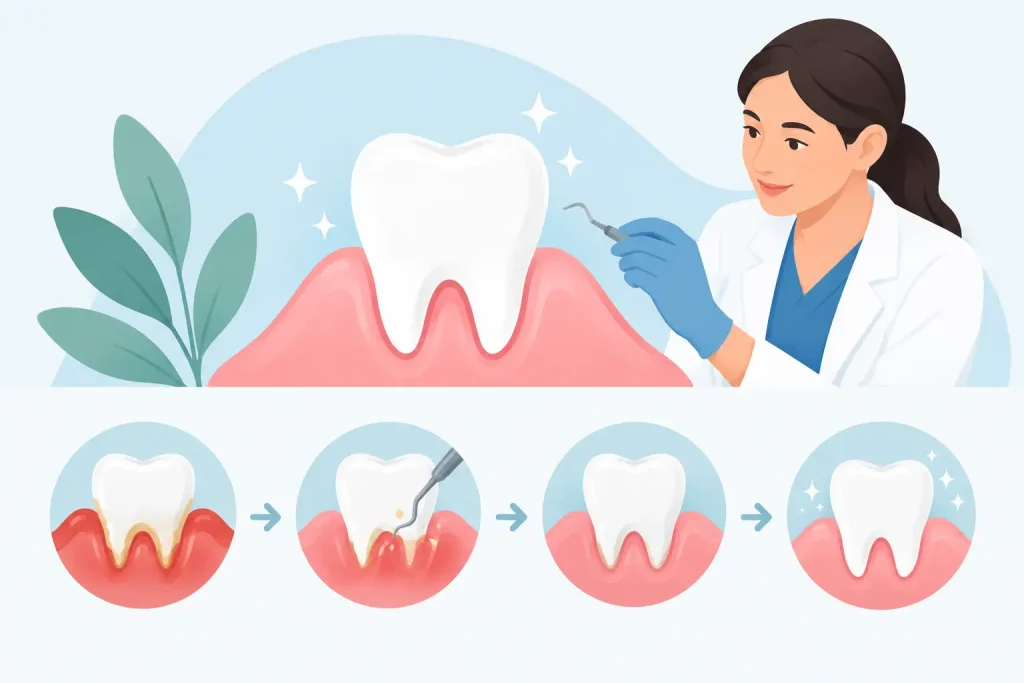
Bleeding when you brush is easy to dismiss, particularly when life is busy. But gums that bleed, look swollen or feel tender are asking for attention. This gum health treatment example shows how care may progress from the first appointment through to maintenance, with treatment tailored to the cause, the health of the supporting bone and your individual risk factors.
The most reassuring part is that gum disease is often manageable, especially when it is found early. The right plan is not simply a quick clean. It begins with understanding what is happening below the gumline, then providing gentle care that helps you keep the result going at home.
A gum health treatment example: a common starting point
Imagine an adult who has noticed bleeding around the back teeth for several months. Their breath does not feel as fresh as usual, and they have started avoiding floss because it makes the gums bleed. There may be no severe pain, which is why gum disease can be missed. Early gum problems do not always hurt.
At the first visit, the dentist or oral health professional takes time to ask about brushing habits, smoking or vaping, medications, medical conditions and any past history of gum treatment. Conditions such as diabetes, dry mouth and some medications can affect gum health. Stress, pregnancy and changes in routine may also make inflammation more noticeable.
A thorough examination follows. This usually includes checking for plaque and hardened deposits called calculus, assessing gum colour and swelling, measuring the spaces between the gums and teeth, and looking for gum recession or loose teeth. Dental X-rays may be recommended where needed to check the bone supporting the teeth.
These details matter because bleeding gums can be caused by plaque-related gingivitis, which is inflammation without bone loss. It may also be a sign of periodontitis, a more advanced gum infection that damages the bone and fibres holding teeth in place. The treatment approach, appointment time and maintenance needs can be quite different.
Step one: removing the cause of inflammation
For gingivitis, treatment may involve a professional clean combined with practical guidance on brushing between the teeth. Tooth Shine Dental uses a prevention-led approach, so the focus is not on blame. Plaque can build up in difficult areas even when someone brushes every day, especially around crowded teeth, old fillings, bridges or behind the lower front teeth.
Guided Biofilm Therapy may be used to gently highlight and remove biofilm, the sticky bacterial layer that forms on teeth and gums. Seeing where plaque gathers can be useful. It turns a vague instruction to “brush better” into clear, personal advice about the areas that need more attention.
Hardened calculus cannot be removed by a toothbrush alone. A professional clean removes these deposits from accessible areas and polishes the tooth surfaces where appropriate. Some people only need one appointment and a review, while others benefit from staged care if there is a heavier build-up or sensitive gums.
At home, the plan may include brushing twice daily with a soft toothbrush and fluoride toothpaste, cleaning between teeth each day with interdental brushes or floss, and focusing on the gumline rather than brushing aggressively. The best tool is the one that fits comfortably and that you can use consistently. For example, interdental brushes may be more effective than floss where spaces between teeth allow, while floss may suit tighter contacts.
When deeper gum treatment is needed
If the examination shows deeper gum pockets, bleeding beneath the gums or bone loss on X-rays, the treatment example changes. Periodontitis cannot be reversed with a standard scale and clean alone, but it can often be stabilised with careful professional treatment and ongoing maintenance.
The next stage may be non-surgical periodontal treatment, sometimes described as deep cleaning or root surface debridement. This involves cleaning bacterial deposits and calculus from below the gumline. The mouth may be treated in sections across more than one appointment, which allows the clinician to work thoroughly and helps keep each visit comfortable.
Local anaesthetic can be offered when deeper cleaning is required. You should not feel pressured to push through discomfort. Let the team know if you are anxious, have had difficult dental experiences or need breaks during treatment. Gentle, unhurried care can make a substantial difference.
It is also worth being realistic about the aim. Deep gum pockets may improve after treatment, but severely affected areas may not return to the measurements of a completely healthy mouth. The priority is to reduce inflammation, slow or stop further loss of support and give you the best chance of keeping your natural teeth.
The review appointment: checking whether treatment is working
Gums need time to heal. A review is often arranged several weeks after active treatment so the clinician can re-measure the gums and compare the results with the first assessment. Less bleeding, firmer gum tissue and shallower pocket measurements are encouraging signs.
If certain areas remain inflamed, the answer is not always more cleaning. The dentist will consider why that area has not responded. It could be a difficult-to-clean tooth position, an overhanging filling edge, smoking, uncontrolled diabetes, clenching, dry mouth or inconsistent cleaning between the teeth. Occasionally, referral to a gum specialist may be appropriate for complex or advanced cases.
This review is also where a tailored plan becomes valuable. Two people with similar amounts of calculus at their first visit may need very different care afterwards. One may be stable with six-monthly preventive visits. Another, particularly someone with a history of periodontitis, may need maintenance every three or four months to keep inflammation under control.
Ongoing maintenance protects the result
Gum treatment is more like managing a long-term health risk than fixing a chipped tooth once. Once periodontitis has occurred, the bacteria that contribute to it can return. Regular maintenance removes deposits before they trigger more inflammation and gives the team a chance to identify changes early.
At a maintenance appointment, the gums are checked for bleeding and pocket changes, plaque and calculus are removed, and your home routine can be adjusted if needed. This is also a useful time to check crowns, bridges, implants and fillings. These restorations can last well when the gums around them are healthy, but they need careful cleaning too.
Smoking or vaping can make gum disease harder to detect because it may reduce visible bleeding while disease still progresses. Quitting can improve general health as well as gum healing. If you have diabetes, keeping blood glucose well managed supports the body’s ability to respond to gum treatment. These conversations should always be practical and respectful, not judgemental.
What this example does not mean
Not every bleeding gum needs deep cleaning, and not every patient with gum disease needs surgery. The correct treatment depends on the diagnosis, the amount of bone support, your medical history, your cleaning routine and whether the condition improves after initial care.
Equally, mouthwash is not a substitute for removing plaque from teeth. Some therapeutic mouthwashes can have a short-term role when recommended by a dentist, but they do not clean beneath the gumline or between teeth. Brushing and interdental cleaning remain central to daily prevention.
You should arrange a dental assessment sooner rather than later if you notice persistent bleeding, bad breath that does not settle, gums pulling away from teeth, pus, a change in how your teeth bite together or a loose tooth. Swelling with severe pain, fever or difficulty swallowing needs urgent dental advice.
A calm assessment can turn an uncertain symptom into a clear plan. If your gums bleed when you brush, it is not something you need to live with – early, personalised care can help protect the foundation of your smile for years to come.