
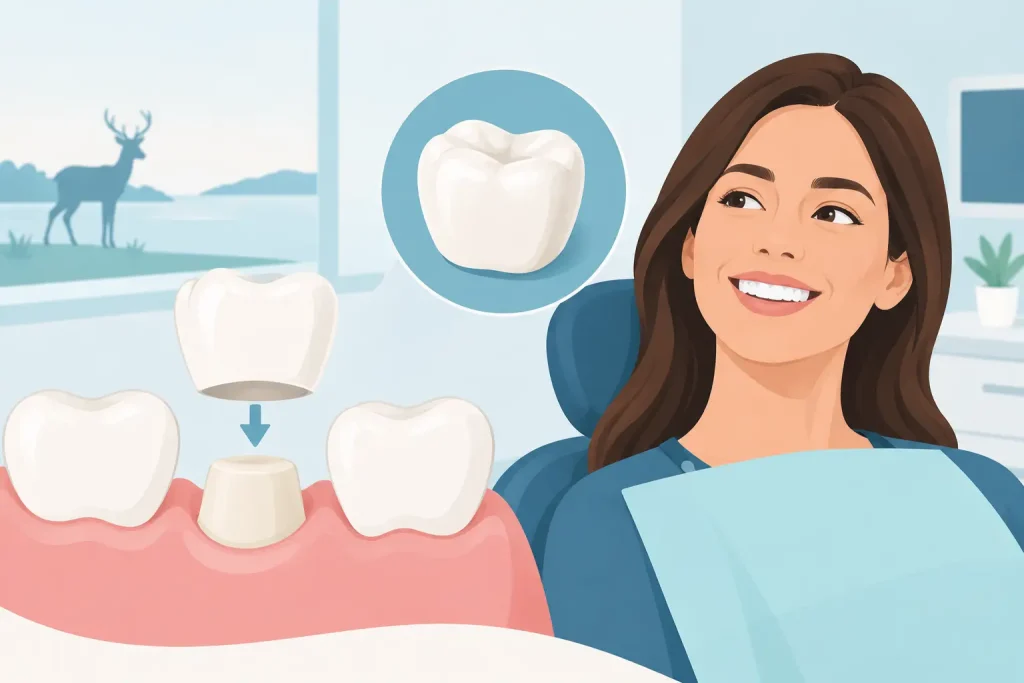
A tooth can be badly cracked yet still feel fine when you bite down. It may have a large old filling, a piece missing near the gumline, or a history of root canal treatment. In these situations, dental crowns Deer Park patients choose are not simply about improving appearance. A carefully planned crown can protect the remaining tooth structure and help you keep your natural tooth functioning comfortably for longer.
A crown is never the automatic answer to every damaged tooth. At Tooth Shine Dental, the first step is to understand why the tooth has weakened, check the health of the gums around it, and talk through whether a filling, crown, extraction or another option makes the most sense for you.
What is a dental crown?
A dental crown is a custom-made cover that fits over a prepared tooth. It restores the tooth’s shape, strength and chewing surface while protecting the portion that remains underneath. Crowns are commonly made from durable tooth-coloured ceramic, although the best material depends on where the tooth sits, how much force it receives, the space available and your bite.
Unlike a small filling, a crown wraps around the tooth. This can be particularly helpful when there is not enough healthy enamel left for a filling to stay secure over time. The goal is not to remove more tooth than necessary. It is to create a restoration that is strong, comfortable and suited to your mouth.
When might a crown be recommended?
A crown may be considered after a tooth has lost significant structure through decay, fracture or a very large filling. Back teeth carry substantial pressure every day, especially if you clench or grind, so a weakened molar can be at greater risk of splitting.
Crowns are also often used to protect a tooth after root canal treatment. The tooth may no longer have the same internal strength, even when the infection has been treated successfully. Covering it can reduce the chance of a major fracture later.
Other reasons include restoring a heavily worn tooth, improving the form or colour of a tooth when other cosmetic options are unsuitable, or supporting a dental bridge. If a tooth is cracked, the recommendation depends on the depth and direction of the crack. Some cracks can be stabilised with a crown. Others extend too far below the gum or into the root, making the tooth difficult or impossible to save.
That distinction matters. A crown can be an excellent long-term solution for the right tooth, but it cannot repair a tooth with an untreatable fracture or active gum disease that has already compromised its support.
Your assessment should start with the whole mouth
It is tempting to focus only on the broken or sensitive tooth. Yet the long-term success of a crown depends on more than the crown itself. Your dentist needs to assess decay risk, gum health, bite forces and cleaning habits, as well as the tooth’s nerve and root condition.
X-rays may be needed to look beneath existing fillings and around the root. Your gums are checked for inflammation, bleeding and bone support. If plaque and tartar are regularly collecting around the gumline, placing a beautiful crown without addressing that cause can set you up for further decay or gum problems at its edge.
This prevention-led approach may mean treating gum inflammation first, improving home care, or monitoring a tooth before committing to a crown. It can feel slower than a quick fix, but it helps make treatment decisions more predictable and protects your investment in the long run.
What happens during crown treatment?
Crown treatment is usually completed over more than one appointment, although the pathway varies according to the tooth and the technology available. At the first visit, your dentist numbs the area and gently shapes the tooth so there is room for the crown material. Any decay or failing filling is removed, and the tooth may need to be built up if a large portion is missing.
A digital scan or impression records the prepared tooth and surrounding teeth. This information is used to make a crown that suits your bite and blends naturally with nearby teeth. A temporary crown may be placed while the final crown is made. It is designed for short-term protection, so avoid very sticky foods and take care when flossing around it.
At the fitting visit, the final crown is checked for colour, shape and bite before being bonded into place. Your dentist will make small adjustments if needed. A crown should feel like part of your bite, not high, sharp or awkward.
Some patients may be suitable for digitally designed same-day crown treatment as this technology becomes available. Suitability still depends on the tooth, the complexity of the restoration and whether the tooth needs further treatment first. A same-day option is convenient, but careful assessment and a well-fitted result matter more than speed.
What does a crown feel like afterwards?
It is normal to notice a new crown with your tongue for a day or two. Mild tenderness around the gum can also occur after treatment, particularly if the tooth was already inflamed or the work was extensive. This should settle.
Contact your dentist if your bite feels uneven, pain increases rather than improves, you have lingering sensitivity to hot or cold, or the crown feels loose. Do not wait and hope a high bite will settle on its own. Early adjustment can prevent unnecessary discomfort and stress on the tooth.
A crown does not make the tooth underneath immune to decay. The join between the crown and natural tooth remains an area that needs careful cleaning. If decay develops there, it can progress quietly beneath the edge of the crown.
Caring for dental crowns in Deer Park
Looking after a crown is much like looking after your natural teeth: brush twice a day with fluoride toothpaste and clean between your teeth daily. Floss, interdental brushes or another cleaning aid may be recommended depending on the spaces around your teeth and the shape of the crown.
If you clench or grind, a custom night guard may help protect both the crown and your other teeth. Avoid using teeth to open packaging, chewing ice, or biting hard objects. Ceramic is very strong, but it is not indestructible.
Regular check-ups allow your dentist to examine the crown margins, gums and bite before a small issue becomes a complicated repair. There is no fixed expiry date for every crown. Some last many years, while others need earlier attention due to grinding, decay, gum changes, trauma or wear. Good daily care and healthy gums have a major influence on longevity.
Costs, choices and asking the right questions
Crown costs vary because no two teeth, materials or treatment plans are exactly alike. A straightforward crown on a stable tooth is different from rebuilding a tooth after decay, treating the nerve, managing gum disease or replacing a missing tooth with a bridge or implant-supported crown.
Before proceeding, you should receive a clear explanation of what is included, any additional treatment that may be required, and the alternatives. It is reasonable to ask what may happen if you delay treatment, whether a filling remains a realistic option, which material is proposed and why, and how your private health insurance may contribute.
A transparent conversation is especially valuable when a tooth is borderline. In some cases, saving it with a crown is worthwhile. In others, the prognosis may be limited and discussing extraction and replacement options is more honest. The right decision balances your comfort, oral health, budget and long-term goals.
If you have a broken tooth, a lost filling, pain when biting or a crown that has come loose, arranging an assessment promptly can make a real difference. Gentle, thoughtful care gives you the space to understand your options and choose the next step with confidence.