A missing tooth can change more than the look of your smile. It may make chewing awkward, affect speech, allow nearby teeth to drift, or leave you avoiding photos and favourite foods. The best ways to replace missing teeth depend on where the gap is, the health of your gums and jawbone, your budget, and what feels manageable for your daily life.
There is no single treatment that suits everyone. A calm assessment gives you the chance to understand the options, ask questions and choose a plan that protects your oral health for the long term.
Why it is worth replacing a missing tooth
Not every gap needs urgent treatment. For example, a missing wisdom tooth usually does not need replacement. But a missing front tooth, premolar or molar can have wider effects over time.
Teeth around the space can tip or move into it. The opposing tooth may gradually over-erupt because it no longer has a tooth to bite against. This can change the way your teeth meet and make cleaning harder. After a tooth is lost, the bone in that area can also slowly reduce in volume, particularly where a tooth root is no longer stimulating it.
Replacing a tooth is not only about appearance. It can support comfortable chewing, bite stability and confidence. Before deciding how to fill the space, your dentist should assess the surrounding teeth, gum health, bite and bone support. Healthy gums are the foundation of every replacement option.
Best ways to replace missing teeth
Dental implants: a fixed replacement that stands on its own
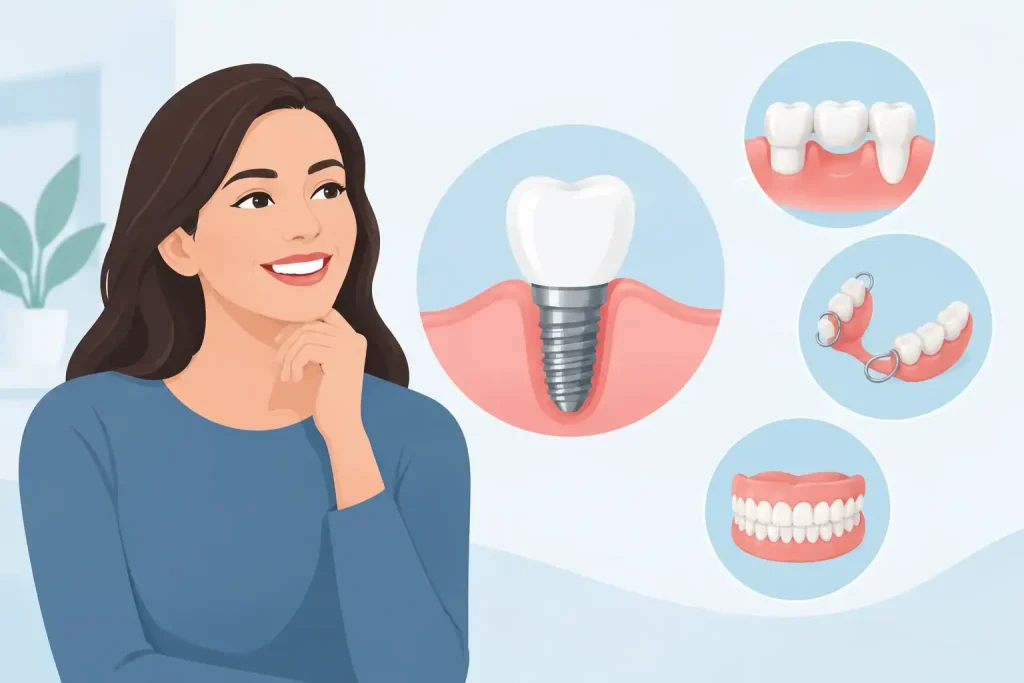
A dental implant replaces the root of a missing tooth with a small titanium fixture placed in the jawbone. Once it has healed and integrated with the bone, a custom crown is fitted on top. For several missing teeth, implants may also support a bridge. For people missing all teeth, a small number of implants may help secure a full denture.
An implant does not rely on the teeth beside the gap, which is a major advantage when those teeth are healthy. It can feel and function much like a natural tooth, and it helps preserve bone in the treated area. With good daily cleaning and regular maintenance, implants can be a durable long-term solution.
However, implants involve a surgical procedure and take time. Healing can take several months, although a temporary tooth may be possible in suitable situations. Adequate bone and healthy, stable gums are needed. Smoking, uncontrolled gum disease, some medical conditions and teeth grinding may affect suitability or the treatment plan. If bone has reduced after a tooth was lost, grafting may be discussed before implant placement.
Implants usually have a higher upfront cost than other options, but their potential longevity and independent support can make them worthwhile for the right person.
Dental bridges: a fixed option for selected gaps
A dental bridge fills a gap by attaching an artificial tooth to the teeth on either side. A traditional bridge uses crowns on neighbouring teeth to support the replacement tooth between them. This may be particularly sensible when the adjacent teeth already have large fillings, cracks or crowns and would benefit from protection.
A bridge is fixed in place, so it cannot be removed at home. It can restore the appearance of a front-tooth gap or help you chew more comfortably after losing a back tooth. Treatment is generally completed more quickly than an implant, and selected cases may be suitable for modern same-day crown and bridge technology.
The trade-off is that a traditional bridge requires preparation of the supporting teeth, even if they are otherwise healthy. It also needs careful cleaning underneath the replacement tooth. Special floss threaders or interdental brushes may be recommended. A bridge can be an excellent option, but it is important to consider the condition and long-term outlook of the supporting teeth first.
For some front teeth, a resin-bonded bridge may be considered. It is bonded to the back of a neighbouring tooth and usually requires less tooth preparation. It is more conservative, though it may not be suitable for every bite and can occasionally come loose.
Partial dentures: a removable and adaptable solution
A partial denture is a removable appliance that replaces one or more missing teeth. It may be made from acrylic, metal or flexible materials, depending on the design and your needs. It can be a practical choice when several teeth are missing, when a fixed solution is not suitable, or when a more affordable option is preferred.
A well-designed partial denture can improve the way you chew, support facial appearance and prevent some teeth from drifting. It may also serve as a temporary replacement while you are healing after an extraction or considering a future implant.
Because it is removable, it needs to be taken out and cleaned daily. It can take time for the mouth to adjust, and some people notice bulkiness or movement at first. Dentures may need adjustment as the gums and jawbone change. They are not a lesser choice – for many patients, they are the most appropriate balance of function, cost and comfort.
Full dentures: replacing all teeth in an arch
When all upper or lower teeth are missing, a full denture can restore the smile and everyday function. Conventional dentures sit on the gums and are shaped to suit your mouth. They are removable for cleaning and should usually be left out overnight to allow the gum tissues to rest.
Lower dentures can be less stable than upper dentures because the tongue and reduced surface area can affect their hold. Implant-retained dentures may offer improved security for eligible patients. These use implants as anchors, helping reduce movement while still allowing the denture to be removed for cleaning.
A full denture takes skill and adjustment. Speech, chewing and comfort improve with time, follow-up visits and a carefully balanced fit. Regular reviews remain important because the mouth changes even after teeth are lost.
Can a missing tooth be replaced straight after extraction?
Sometimes, yes. An immediate denture, temporary bridge or temporary tooth may be planned before an extraction so you are not left with a visible gap. In carefully selected implant cases, an implant may be placed on the same day a tooth is removed.
Same-day treatment is not automatically the best choice. Infection, bone quality, gum condition and bite forces all matter. If a tooth has been painful or infected, allowing the site to heal first may create a safer and more predictable result. A personalised plan should explain the reason for the recommended timing, rather than rushing treatment.
How to choose the right option for you
The most suitable treatment often becomes clearer after a thorough examination, digital imaging and gum assessment. Your dentist will look at the number and location of missing teeth, whether nearby teeth have fillings or crowns, the health of the gums, available bone, your bite and your ability to clean around the replacement.
Your priorities matter too. Some people want the closest feel to a natural tooth and are comfortable with a longer implant process. Others need a quicker fixed bridge before an event, or prefer a removable denture that keeps costs more manageable. There is room for honest discussion without pressure.
Be cautious about choosing purely on price. The cheapest option at the beginning may require more repairs, replacement or maintenance later, while the most expensive option is not always necessary. Ask about the likely lifespan, cleaning routine, future costs and what happens if supporting teeth or gums change.
Caring for a replacement tooth
Replacing a tooth does not remove the need for prevention. Implants can develop gum inflammation around them, bridges can trap plaque at their edges, and dentures still require healthy gums and regular mouth checks.
Brush twice daily with fluoride toothpaste, clean between teeth as advised, and attend regular check-ups and gum maintenance visits. If you wear a denture, clean it gently with a denture brush and suitable cleanser, not regular toothpaste, which can be abrasive. Remove it at night unless your dentist gives different instructions.
If you have lost a tooth, or have been told one cannot be saved, you do not need to make a rushed decision alone. At Tooth Shine Dental, we take the time to assess your gums, bite and overall oral health before talking through treatment choices in clear, practical terms. A thoughtful plan now can help keep eating, smiling and caring for your teeth more comfortable in the years ahead.