
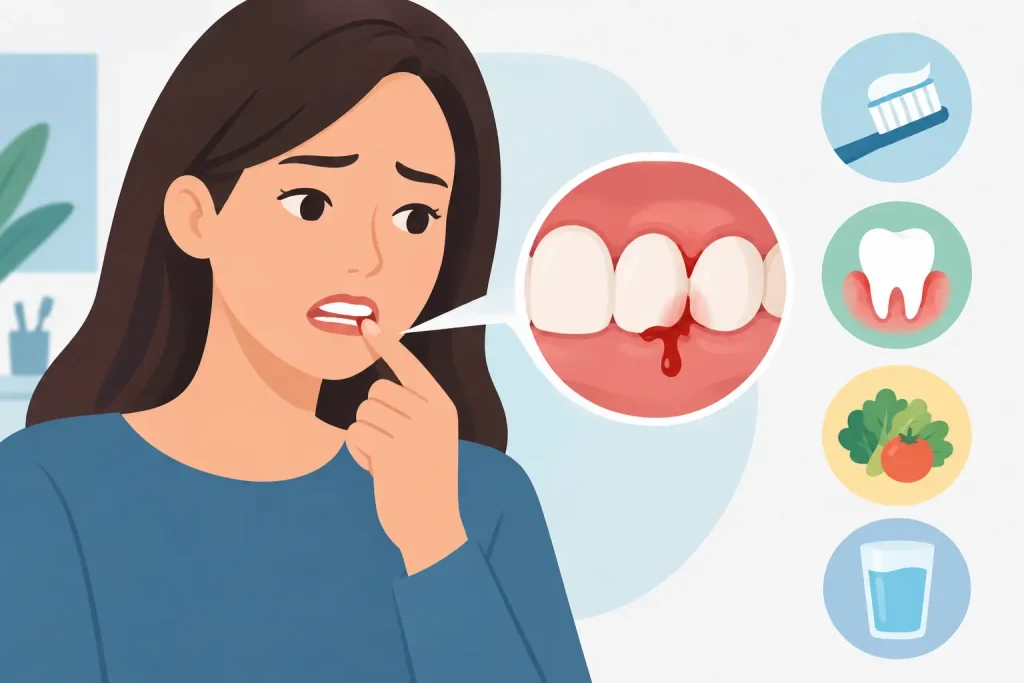
Seeing pink in the sink after brushing can be easy to dismiss, especially when life is busy. But bleeding gums are your mouth’s way of signalling that something needs attention. They are common, and they can often be improved with timely, gentle care, but healthy gums should not regularly bleed when you brush or clean between your teeth.
The most common cause is plaque-related gum inflammation. A professional assessment can identify what is happening beneath the gumline, explain your personal risk factors and help prevent a small concern from becoming more difficult or costly to treat.
Why bleeding gums happen
Plaque is a soft, sticky layer of bacteria that builds up on teeth each day. If it is not removed thoroughly, particularly around the gumline and between teeth, it can irritate the gums. This early stage of gum disease is called gingivitis. Gums may look red or puffy, feel tender, bleed during brushing, or leave an unpleasant taste in the mouth.
Gingivitis is often reversible. Consistent cleaning at home, together with a professional clean where needed, can allow the gums to settle and heal. The challenge is that it is not always painful. Some people assume that no pain means no problem, while inflammation continues quietly.
When gum inflammation is left untreated, it can progress to periodontitis, a more serious form of gum disease. This affects the tissues and bone supporting the teeth. It may lead to gums pulling away from teeth, persistent bad breath, tooth mobility or changes in the way teeth fit together. Not everyone with bleeding has periodontitis, but this is why an individual gum assessment matters.
Other possible causes of bleeding gums
Brushing too firmly or starting to floss after a long break can make gums bleed temporarily. It is still worth checking your technique rather than stopping altogether. A soft toothbrush and gentle, small movements along the gumline are usually more effective than scrubbing hard.
Hormonal changes can also make gums more sensitive. This may occur during puberty, pregnancy or menopause. Some medicines, including blood-thinning medication, may increase bleeding, while dry mouth can make plaque control more difficult. Smoking can mask gum bleeding in some people, so gums may still have disease even if they do not appear to bleed.
Less commonly, nutritional deficiencies or medical conditions can play a part. Let your dentist know about changes to your health, medication or pregnancy. If bleeding is heavy, spontaneous, accompanied by unexplained bruising, or occurs elsewhere in the body, contact your GP promptly.
What to do when your gums bleed
Do not stop brushing because you see blood. Avoiding the sore area lets plaque remain there, which usually prolongs the inflammation. Instead, use a soft-bristled toothbrush twice daily with fluoride toothpaste and clean carefully where the teeth meet the gums.
Clean between your teeth once a day using floss, interdental brushes or another option recommended for the spaces between your teeth. The right tool depends on your teeth, gum condition, restorations and dexterity. If interdental cleaning makes your gums bleed at first, gentle daily cleaning may improve this over one to two weeks. Ongoing bleeding deserves a dental review.
It can help to slow down rather than brush harder. Angle the brush gently towards the gumline and work methodically around every surface. An electric toothbrush with a pressure sensor may be useful for people who tend to press too hard, but good technique matters more than the type of brush.
Mouthwash can freshen breath, but it is not a substitute for removing plaque with a toothbrush and interdental cleaner. Likewise, whitening toothpaste will not treat inflamed gums and can feel abrasive for some people. If your mouth is sore, choose gentle products and seek advice before relying on strong rinses.
A few practical habits also support gum health. Drink water regularly, limit frequent sugary snacks and drinks, and avoid tobacco. If you wear a retainer, clear aligners or a night guard, keep it clean as instructed. These appliances can collect plaque if they are not cleaned properly.
When bleeding gums need a dental appointment
Book an appointment if bleeding continues beyond about two weeks of careful daily cleaning, returns regularly, or comes with swelling, tenderness or bad breath. A check-up is not simply about looking for holes in teeth. It is an opportunity to measure gum health, check for plaque and tartar in hard-to-reach areas, and look for signs of bone loss or other concerns.
At Tooth Shine Dental, a gum assessment is approached thoughtfully, not as a rushed add-on. Your dentist can explain what they can see, discuss whether a routine clean or more focused gum treatment is appropriate, and show you practical ways to clean the areas that need extra attention. Treatment is tailored because the right plan for mild gingivitis is different from the care needed for established gum disease.
Arrange more urgent dental care if you have any of the following:
- swelling of the face, jaw or gums, particularly with fever or feeling unwell;
- severe tooth or gum pain, pus, or a bad taste that will not go away;
- a loose tooth, a sudden change in your bite, or gums that appear to be receding quickly; or
- bleeding that is heavy, does not settle, or follows an injury.
If facial swelling affects breathing or swallowing, seek emergency medical help immediately.
Bleeding gums in children
Children can develop gum inflammation too, particularly when brushing is rushed or new adult teeth are coming through. A little bleeding is not something to shame them about. It is a cue to make brushing calmer, more thorough and part of the daily routine.
Parents may need to help with brushing until a child has the coordination to clean effectively on their own. Focus on the gumline as well as the chewing surfaces, and encourage water as the everyday drink. If your child has persistent bleeding, swollen gums, pain, bad breath or difficulty brushing, a dental visit can provide reassurance and age-appropriate guidance.
A calmer way forward
Bleeding gums are often one of the earliest warnings your mouth provides, and acting early can make a real difference. Be gentle but consistent with home care, and give persistent bleeding the attention it deserves. A clear assessment and a personalised plan can help you protect the foundation of your smile: healthy, comfortable gums.