A six-month check-up is not automatically the right schedule for every smile. One person may keep their teeth and gums healthy with routine preventive visits, while another may develop decay or gum inflammation quickly despite brushing every day. An individual dental risk assessment looks beyond a quick look at your teeth to understand what is most likely to affect your oral health – and what can be done early.
This approach matters because dental problems do not always hurt at first. Gum disease can progress quietly, small cracks can worsen under pressure, and early decay may be difficult to spot without a careful examination and appropriate X-rays. Knowing your personal risks allows your dentist to recommend care that is proportionate, practical and focused on prevention rather than simply applying the same plan to everyone.
What is an individual dental risk assessment?
An individual dental risk assessment is a thorough review of the factors that may make you more likely to develop tooth decay, gum disease, tooth wear, broken teeth or other oral-health concerns. It is not a pass-or-fail test, and it does not mean treatment will be pushed on you.
Instead, it gives you and your dentist a clearer starting point. Your findings are considered alongside your health history, current concerns, lifestyle and goals. If you are anxious about treatment, managing a busy family schedule, considering whitening or clear aligners, or worried about a recurring toothache, those details also shape the conversation.
At Tooth Shine Dental, this assessment supports a slow dentistry approach. Time is taken to explain what is being seen, why it matters and what your options are. Sometimes the best next step is treatment. Sometimes it is improved home care and a review at the right interval. Often, it is a combination of both.
What your dentist may check
A risk assessment begins with listening. Your dentist may ask whether your gums bleed when you brush, if you have sensitivity, whether you wake with jaw tension, or if you have had fillings, extractions or gum treatment in the past. A new issue, such as a chipped tooth after eating something hard, can be just as relevant as a long-standing dental history.
Your teeth and existing dental work
The examination looks for early decay, leaking or worn fillings, cracks, weakened teeth and changes around crowns, bridges or implants. Teeth with large old fillings can be more vulnerable to fracture, even when they are not painful. Finding that risk early may allow a tooth to be protected with a filling or crown before it breaks and requires more complex care.
Your bite is also relevant. Clenching or grinding can wear teeth down, chip edges and place extra stress on restorations. Some people notice this as morning jaw soreness or frequent headaches, while others have no symptoms at all.
Your gums and supporting bone
Healthy gums are the foundation of a healthy smile. During a gum assessment, your dentist checks for plaque and hardened deposits, bleeding, swelling, gum recession and pockets around the teeth. Measurements around the gums can help identify whether gingivitis or gum disease is present and whether it is stable, improving or progressing.
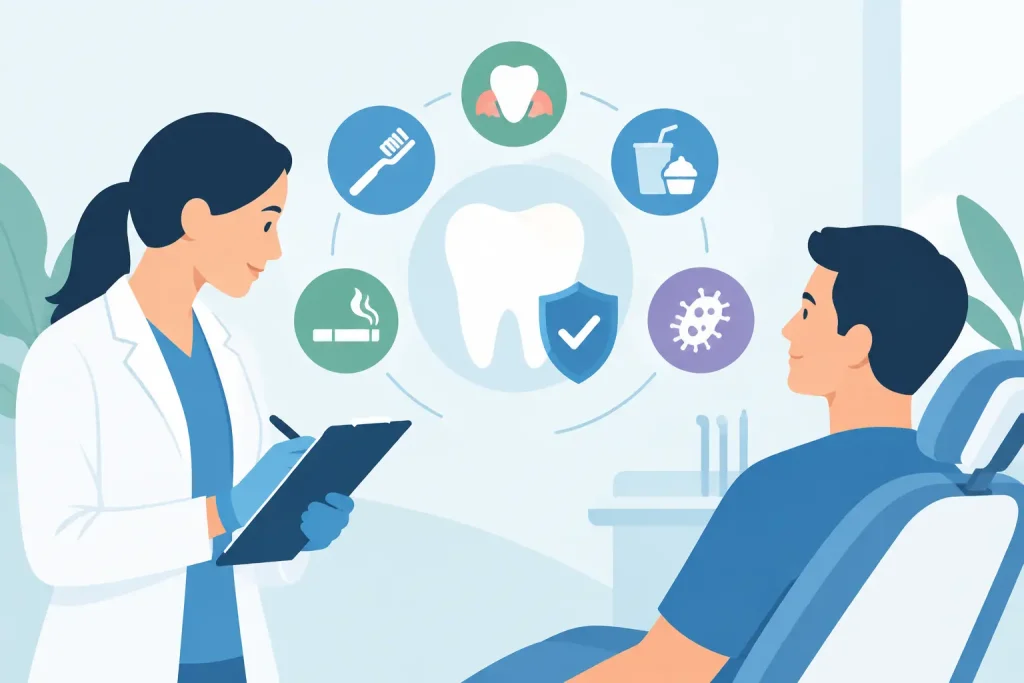
Gum disease is influenced by more than brushing habits. Smoking or vaping, diabetes, certain medicines, pregnancy, dry mouth, family history and previous gum disease can all affect risk. If deeper cleaning or gum disease treatment is needed, it is usually planned in stages, with ongoing maintenance tailored to your response.
X-rays, photographs and digital records
Some concerns sit where the eye cannot see them, including decay between teeth, infection around a root, bone loss or problems beneath an existing restoration. Where clinically appropriate, X-rays help provide this information. Digital photographs and scans may also be used to record tooth wear, gum changes or areas that need to be monitored.
Not everyone needs the same imaging at every visit. The decision depends on your clinical history, current findings and level of risk. This is one reason a personalised assessment is more useful than a fixed checklist.
Daily habits and general health
Frequent sugary snacks, sweet drinks, sports drinks and sipping soft drink over several hours can increase decay risk, even if you brush well. Acidic drinks, reflux and frequent vomiting can soften enamel and contribute to tooth wear. Dry mouth, often linked with medicines or mouth breathing, reduces the protective effect of saliva.
Your dentist may also discuss brushing technique, fluoride toothpaste, cleaning between teeth and diet in a straightforward, judgement-free way. The goal is not perfection. It is to identify changes that will make the greatest difference for your mouth.
Why two people can need different recall visits
The familiar six-month dental visit is a useful guide for many people, but it is not a rule. A child with a low decay risk, excellent brushing support and healthy gums may need a different review schedule from an adult with active gum disease. Similarly, someone with a history of repeated decay, dry mouth or several heavily restored teeth may benefit from more frequent checks.
A shorter interval is not a punishment or a sales tactic. It can be a sensible way to monitor a problem while it is still manageable. For example, a person receiving gum disease treatment may need regular maintenance appointments to keep bacteria below harmful levels. A child with newly erupted molars may need extra preventive support while brushing skills are still developing.
On the other hand, if your teeth and gums remain stable over time and your risk is low, your recall interval may be extended. The right schedule is the one that protects your health without unnecessary appointments.
What happens after your assessment
Once the assessment is complete, your dentist should explain your findings in plain language. You may be told that your risk is low, moderate or high in specific areas, such as decay or gum disease. These categories are not labels for life. They can change as your oral health, habits, treatment and general health change.
Your plan may include a check-up and professional clean, Guided Biofilm Therapy where suitable, fluoride support, gum treatment, replacement of a failing filling, a night guard for grinding, or monitoring of a small area. If treatment is recommended, you should understand the reason for it, the likely benefits, alternatives, timing and expected costs before you decide.
There are trade-offs worth discussing. Monitoring an early crack may avoid immediate treatment, but it carries a chance that the tooth could fracture later. Replacing an old filling before it fails can protect the tooth, yet not every older filling needs to be changed simply because it has been there for years. Good dentistry weighs the clinical evidence with your preferences, budget and comfort.
Risk assessment for children and families
Children benefit from risk assessment well before they have a dental problem. Their risk can change quickly as adult teeth erupt, diet changes, orthodontic concerns appear or brushing becomes more independent. Early visits help children become familiar with the dental environment while there is no urgent issue to manage.
For parents, the discussion may cover brushing with fluoride toothpaste, help with cleaning, fissure sealants where appropriate, snack and drink patterns, injury prevention and the development of the jaws and bite. Early orthodontic assessment can identify concerns that are best watched or addressed while a child is still growing.
If a child is nervous, a gentle, unhurried appointment can make a real difference. Building trust now may help them feel more confident about dental care for years to come.
When to arrange an assessment sooner
Do not wait for your usual check-up if you have persistent toothache, facial swelling, a broken tooth, bleeding gums that do not settle, a loose tooth, a bad taste from one area, or pain around a wisdom tooth. These symptoms do not always mean the same thing, but they deserve timely assessment.
It is also sensible to book in after a major change in health or medication, during pregnancy, before starting clear aligner treatment, or if you have avoided the dentist for a while. There is no need to feel embarrassed. A calm examination is simply the first step towards understanding where things stand.
A personalised dental risk assessment gives you something more useful than a generic reminder card: a clearer picture of your mouth, an honest plan and the chance to keep small concerns from becoming bigger ones. If something has felt different, or it has been longer than you intended, a thoughtful check-up is a kind place to start.