A standard scale and clean can leave you feeling fresh, but guided biofilm therapy treatment takes a more considered approach. It shows us where the bacterial plaque on your teeth and gums is hiding before it is removed. That means your appointment is tailored to what your mouth needs, with a strong focus on protecting your gums and helping you prevent problems between visits.
Biofilm is not always easy to see, especially around the gumline, between teeth, behind lower front teeth and around dental work. It can build up even when you brush regularly. For families and busy adults in Deer Park and Melbourne’s west, seeing those areas clearly can turn a routine dental visit into practical advice that is easier to follow at home.
How guided biofilm therapy treatment works
Biofilm is a soft, sticky layer of bacteria that forms naturally on teeth. If it is not removed effectively, it can contribute to tooth decay, bad breath, gum inflammation and, over time, gum disease. It can also collect around crowns, fillings, implants, braces and clear aligners.
Guided Biofilm Therapy, often called GBT, is a structured hygiene approach that uses a dye to disclose or highlight biofilm. Rather than guessing where plaque may be, your dentist or oral health professional can see it. You can see it too, which makes the conversation about brushing and cleaning between your teeth much more specific.
The process is gentle, but it is still clinical care. Your gums, teeth, restorations and individual risks are assessed first. The treatment is then adjusted for your comfort, sensitivity, gum health and the amount of hardened calculus present.
First, we check your gum health
Before cleaning begins, we look beyond surface stains. A gum assessment may include checking for bleeding, swelling, pocketing around teeth, recession, tartar build-up and signs of infection. We also consider factors such as dry mouth, smoking, diabetes, previous gum treatment, dental implants and how often you have had decay or gum problems.
This matters because bleeding gums are not something to simply put up with. They are often a sign of inflammation. For some people, improving daily plaque removal and attending regular maintenance appointments may settle early gum disease. For others, deeper periodontal treatment may be needed. A gentle clean alone is not a substitute for treating active gum disease properly.
Then, the biofilm is made visible
A harmless disclosing solution is applied to the teeth. It stains biofilm so the areas needing attention become obvious. This step can be particularly useful for children learning to brush independently, people with orthodontic appliances, and adults who feel they brush carefully but still experience bleeding gums.
There is no judgement in this part of the appointment. Everyone misses areas from time to time. The aim is to identify patterns and offer realistic guidance, whether that means adjusting your brushing angle, choosing an interdental brush size or making better use of floss where it is suitable.
Plaque and staining are removed gently
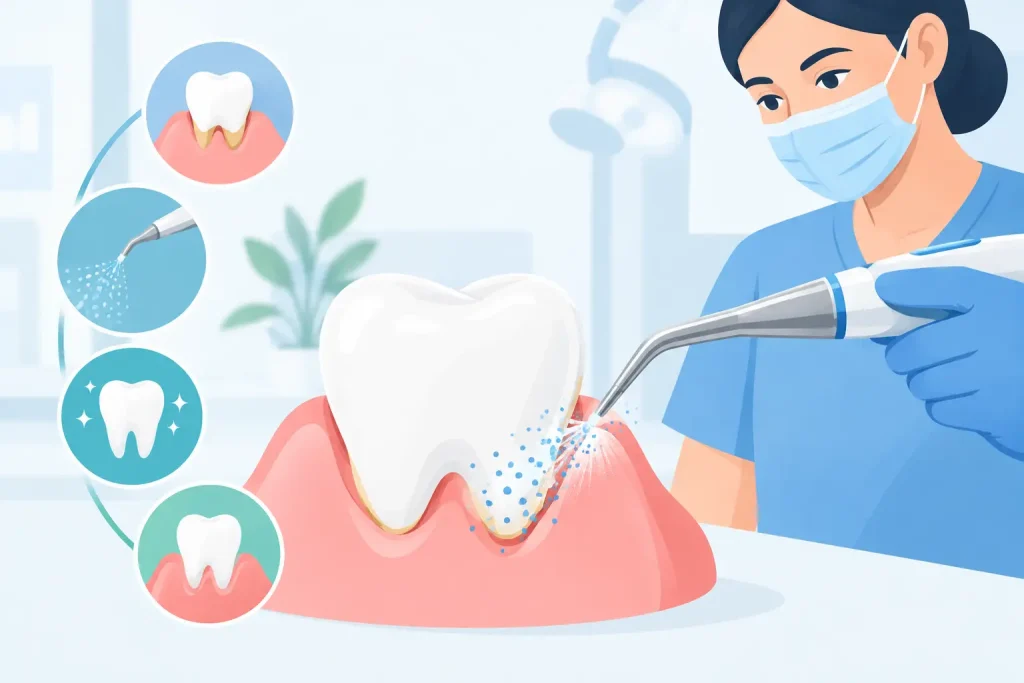
An air-polishing device uses a controlled stream of warm water, air and fine powder to lift biofilm and many surface stains from teeth. It can reach areas that are difficult to clean with a conventional polishing cup, including around the gumline and between teeth. Many patients find it more comfortable than traditional polishing, though everyone’s experience is different.
If tartar, also called calculus, has hardened onto the teeth, it cannot be brushed away. Ultrasonic instruments and hand instruments may be used carefully to remove it. Where possible, the focus is on efficient, gentle cleaning rather than unnecessary scraping. If you are anxious, have sensitive teeth or need breaks, let us know. Taking time and adjusting the pace is part of thoughtful dentistry.
We finish with advice for your own mouth
Your appointment should not end with a generic reminder to brush twice a day. Once your cleaning is complete, we can show you the spots that were most prone to biofilm and discuss the tools that suit you. This could include a soft toothbrush, fluoride toothpaste, floss, interdental brushes or a water flosser as an additional aid.
The right routine depends on your teeth and gums. For example, a person with larger spaces between teeth may benefit more from interdental brushes than floss alone. Someone with implants, bridges or braces may need a different technique again. Small changes, practised consistently, usually matter more than buying every product on the shelf.
Who can benefit from Guided Biofilm Therapy?
Guided Biofilm Therapy can be a helpful option for many adults and children, including those attending for a regular check-up and clean. It is especially useful if you have bleeding gums, recurring plaque build-up, staining from tea, coffee or smoking, orthodontic appliances, crowns, bridges, implants or a history of gum disease.
It can also help patients who have avoided cleans because they remember them as uncomfortable. GBT is designed to be minimally invasive and comfort-focused, but no dental treatment can promise that every person will feel the same. Exposed roots, active inflammation, significant tartar or very sensitive teeth can still make cleaning feel tender. We can explain what we are doing, use appropriate settings and plan breaks so you remain in control.
For young children, the approach is usually adapted to their age, cooperation and oral-health needs. A positive first experience may involve showing them the equipment, keeping the visit short and focusing on coaching rather than trying to complete every part of an adult-style clean. Prevention works best when dental care feels safe and familiar.
When a routine clean is not enough
Guided Biofilm Therapy supports prevention and ongoing maintenance, but it is not a one-size-fits-all solution. If gum disease has progressed below the gumline, bacteria and deposits may be present in deeper pockets around teeth. You may need a more detailed periodontal assessment and targeted gum treatment to reduce infection and protect the bone supporting your teeth.
Contact a dentist promptly if you notice persistent bleeding, bad breath that does not improve, loose teeth, gum swelling, pus, pain when biting or changes in how your teeth fit together. These symptoms do not automatically mean severe gum disease, but they deserve an assessment rather than waiting for the next clean.
Likewise, a clean will not repair a cracked tooth, replace a lost filling or settle a severe toothache caused by infection. Those concerns need their own diagnosis and treatment plan. Clear explanations about what is included, what needs further care and likely costs help you make decisions without pressure.
How often should you have guided biofilm therapy treatment?
The best interval is based on your risk, not a calendar rule. Some people with healthy gums and excellent home care may only need preventive care every six months. Others may need maintenance every three or four months, particularly after gum disease treatment, if they smoke, have diabetes, wear braces, have implants or tend to build up tartar quickly.
Regular visits are valuable because gum problems can be quiet in their early stages. You may not feel pain even while inflammation is developing. Checking your gums over time allows your clinician to notice changes early and recommend the least invasive option where possible.
At Tooth Shine Dental, a Guided Biofilm Therapy appointment is part of a personalised prevention plan, not a rushed clean. We take the time to assess your gums, explain what we find and help you choose a practical next step for your oral health.
Healthy gums are built through ordinary habits done well: careful brushing, cleaning between teeth in the way that suits you, and professional care at the interval recommended for your risk. If it has been a while since your last visit, starting with a calm assessment can make caring for your smile feel much more manageable.